Friday, April 1, 2016
Roubini: Oil to pick up in 2016
Dr. Doom at Arab Strategy Forum, Dubai, December 2015.
Nouriel Roubini is an American professor of Economics at New York University`s Stern School of Business and chairman of RGE Roubini Global Economics

Thursday, March 31, 2016
Roubini: U.S. Equities will be strong until 2016
When will the bubble burst?
Nouriel Roubini is an American professor of Economics at New York University`s Stern School of Business and chairman of RGE Roubini Global Economics
Tuesday, March 29, 2016
Roubini: The Global and Japanese Economy
Nouriel Roubini: Co-founder & Chairman, Roubini Global Economics
Nouriel Roubini is an American professor of Economics at New York University`s Stern School of Business and chairman of RGE Roubini Global Economics
Wednesday, March 23, 2016
Roubini : Migration is beneficial to America
@ https://twitter.com/nouriel
Nouriel Roubini is an American professor of Economics at New York University`s Stern School of Business and chairman of RGE Roubini Global Economics
https://www.thunderclap.it/projects/38513-support-migrationmatters … . I just supported #MigrationMatters . Migration is beneficial to the US and other economies accepting migrants
Nouriel Roubini is an American professor of Economics at New York University`s Stern School of Business and chairman of RGE Roubini Global Economics
Tuesday, March 22, 2016
Roubin @ The Global Economy at the China Development Forum in Beijing 2016

" I am in Beijing to attend/speak at the China Development Forum, the highest level meeting btw senior Chinese leaders and foreign visitors "via twitter @Nouriel
Nouriel Roubini is an American professor of Economics at New York University`s Stern School of Business and chairman of RGE Roubini Global Economics
Monday, March 21, 2016
Roubini : Japan needs a combination of both Monetary Easing and Fiscal Stimulus
Mr Roubini, saying that Japan needed a combination of both monetary easing and fiscal stimulus, claimed that there was a "50-50" chance that the economy contracted in the first quarter of this year; coming after the contraction in the final quarter of 2015, this would put Japan back into technical recession. - See more at: http://business.asiaone.com/news/economist-suggests-governments-spend-their-way-out-trouble#sthash.HCVxWQM9.dpuf
Nouriel Roubini is an American professor of Economics at New York University`s Stern School of Business and chairman of RGE Roubini Global Economics
Sunday, March 20, 2016
Roubini : Japan is not at the center of Global concern
"Japan is not at the center of global concern as such, but certain policy decisions including the BOJ adopting a negative interest rate recently have had a ripple effect following similar moves in Europe, with banks there also going negative," Roubini, also a professor of economics at New York University's Stern School of Business, explained.
"The notion of a negative interest rate started to have bad connotations and in Europe has killed banks' net income margins, which is ineffective and could be counterproductive," the Istanbul-born American said at the Foreign Correspondents' Club of Japan (FCCJ), although added that the use of minus interest rates by central banks "shouldn't be entirely ruled out."

Nouriel Roubini is an American professor of Economics at New York University`s Stern School of Business and chairman of RGE Roubini Global Economics
"The notion of a negative interest rate started to have bad connotations and in Europe has killed banks' net income margins, which is ineffective and could be counterproductive," the Istanbul-born American said at the Foreign Correspondents' Club of Japan (FCCJ), although added that the use of minus interest rates by central banks "shouldn't be entirely ruled out."

Nouriel Roubini is an American professor of Economics at New York University`s Stern School of Business and chairman of RGE Roubini Global Economics
Friday, March 18, 2016
Roubini : The notion of a Negative Interest Rate started to have bad connotations
Roubini : "Japan is not at the center of global concern as such, but certain policy decisions including the BOJ adopting a negative interest rate recently have had a ripple effect following similar moves in Europe, with banks there also going negative," Roubini, also a professor of economics at New York University's Stern School of Business, explained.
"The notion of a negative interest rate started to have bad connotations and in Europe has killed banks' net income margins, which is ineffective and could be counterproductive," the Istanbul-born American said at the Foreign Correspondents' Club of Japan (FCCJ), although added that the use of minus interest rates by central banks "shouldn't be entirely ruled out."

Nouriel Roubini is an American professor of Economics at New York University`s Stern School of Business and chairman of RGE Roubini Global Economics
Thursday, March 17, 2016
Soros against Roubini -- Global Economy
Europas oberster Währungshüter fachte die Spekulationen auf weitere geldpolitische Lockerungen kräftig an. Dax und EuroStoxx starteten durch, der deutsche Aktienindex legte 1,9 Prozent zu, der europäische mehr als 2 Prozent. Auch die Wall Street startete mit Gewinnen in den Handel.
In einem kleinen Ort in Europa außerhalb der Eurozone
machten sich die versammelten Entscheidungsträger trotzdem so ihre Gedanken über die turbulente ökonomische Gegenwart - Davos.
Hussain al Nowais, Al Nowais Inv…
LESEN SIE MEHR: http://de.euronews.com/2016/01/21/wel...
Nouriel Roubini is an American professor of Economics at New York University`s Stern School of Business and chairman of RGE Roubini Global Economics
Wednesday, March 16, 2016
Nouriel Roubini at the ET Global Business Summit
Tune in as Arvind Panagariya, Vice Chairman, NITI AYOG & Nouriel Roubini, Chairman, Roubini Global Economics discuss currencies, global trade, economic growth, reforms in India and much more at the ET Global Business Summit.
Nouriel Roubini is an American professor of Economics at New York University`s Stern School of Business and chairman of RGE Roubini Global Economics
Monday, March 14, 2016
Roubini: Emerging Markets are in serious trouble

“They face global headwinds (China’s slowdown, the end of the commodity super cycle, the Fed’s exit from zero policy rates). Most have not implemented structural reforms to boost sagging potential growth. And currency weakness increases the real value of trillions of dollars of debt built up in the last decade,” he wrote.
http://www.newsmax.com/Finance/StreetTalk/nouriel-roubini-economy-risks-danger/2016/03/03/id/717315/
Nouriel Roubini is an American professor of Economics at New York University`s Stern School of Business and chairman of RGE Roubini Global Economics
Thursday, March 10, 2016
Roubini: "Europe will be the epicenter of the financial turmoil this year"
http://www.eleconomista.es/economia/noticias/7392662/03/16/Roubini-La-Eurozona-sera-el-epicentro-de-las-turbulencias-financieras-este-ano.html
Nouriel Roubini, professor of economics at New York University, has argued in recent weeks that the fall in global stock markets does not correspond with the advent of a new global recession. Volatility have seized financial markets for a number of important risks, but hardly will lead to a new recession. Still, this can be a year of turbulence, and the Eurozone has every chance to be the epicenter of this financial turmoil.
Roubini notes in Project Syndicate that "now there are seven risks that can complicate the current period of current volatility ... The first is the landing of the Chinese economy and its impact on the stock market. But more likely is that china's economy has a bumpy landing rather than a hard landing, investors are not yet entirely peaceful as economic growth slows and capital flight is maintained. "
The second point to the professor at the University of New York are the emerging countries, "which are a serious problem." China consumes less raw materials, their currencies are depreciating strongly, inflation continues to grow and have started to record large current account deficits.

Nouriel Roubini is an American professor of Economics at New York University`s Stern School of Business and chairman of RGE Roubini Global Economics
Friday, March 4, 2016
Roubini speaker in The Philippines -- 04 March 2016

Nouriel Roubini speaker today 04 March 2016 at the Philippines Business and Investment Forum in New York. A success story in Asia.
Nouriel Roubini is an American professor of Economics at New York University`s Stern School of Business and chairman of RGE Roubini Global Economics
Thursday, March 3, 2016
2008 Revisited? by Nouriel Roubini
NEW
YORK – The question I am asked most often nowadays is this: Are we back
to 2008 and another global financial crisis and recession?
My answer is a
straightforward no, but that the recent episode of global financial
market turmoil is likely to be more serious than any period of
volatility and risk-off behavior since 2009. This is because there are
now at least seven sources of global tail risk, as opposed to the single
factors – the eurozone crisis, the Federal Reserve “taper tantrum,” a
possible Greek exit from the eurozone, and a hard economic landing in
China – that have fueled volatility in recent years.
First, worries about a
hard landing in China and its likely impact on the stock market and the
value of the renminbi have returned with a vengeance. While China is
more likely to have a bumpy landing than a hard one, investors’ concerns have yet to be laid to rest, owing to the ongoing growth slowdown and continued capital flight.
Read more at https://www.project-syndicate.org/commentary/global-financial-crisis-redux-by-nouriel-roubini-2016-03#DuJpSWsHPTcZbhyQ.99

Nouriel Roubini is an American professor of Economics at New York University`s Stern School of Business and chairman of RGE Roubini Global Economics
Saturday, February 27, 2016
The National Balance Sheet Approach
Nouriel Roubini outlines Roubini Global Economic's research approach.
Nouriel Roubini is an American professor of Economics at New York University`s Stern School of Business and chairman of RGE Roubini Global Economics
Nouriel Roubini is an American professor of Economics at New York University`s Stern School of Business and chairman of RGE Roubini Global Economics
Friday, February 26, 2016
Roubini: Oil to pick up in 2016
Dr. Doom at Arab Strategy Forum, Dubai, December 2015.
Nouriel Roubini is an American professor of Economics at New York University`s Stern School of Business and chairman of RGE Roubini Global Economics
Nouriel Roubini is an American professor of Economics at New York University`s Stern School of Business and chairman of RGE Roubini Global Economics
Tuesday, February 23, 2016
Roubini: U.S. Economy Slowing Down
Roubini Global Economics Chairman Nouriel Roubini on the outlook for the global economy and Federal Reserve policy.
Nouriel Roubini is an American professor of Economics at New York University`s Stern School of Business and chairman of RGE Roubini Global Economics
Monday, February 22, 2016
Roubini: Fed Might Have Made a Mistake
Nouriel Roubini is an American professor of Economics at New York University`s Stern School of Business and chairman of RGE Roubini Global Economics
Saturday, February 20, 2016
Roubini on Davos debate: Is India at the cusp of fourth industrial revolution?
In an era of digitization, how can India be a global resource for
innovation, growth and talent? Arun Jaitley, Union Minister for Finance
and Information & Broadcasting; John Chambers, Executive Chairman of
Cisco; Sunil Mittal, Chairman of Bharti Enterprises; and Nouriel
Roubini, Economics Professor at New York University, in conversation
with NDTV's Vikram Chandra at the World Economic Forum meet in Davos.
Nouriel Roubini is an American professor of Economics at New York University`s Stern School of Business and chairman of RGE Roubini Global Economics
Nouriel Roubini is an American professor of Economics at New York University`s Stern School of Business and chairman of RGE Roubini Global Economics
Monday, February 15, 2016
Roubini on Deflation
The reason ultra-low inflation remains a problem is that the traditional causal link between the money supply and prices has been broken. One reason for this is that banks are hoarding the additional money supply in the form of excess reserves, rather than lending it (in economic terms, the velocity of money has collapsed). Moreover, unemployment rates remain high, giving workers little bargaining power. And a large amount of slack remains in many countries’ product markets, with large output gaps and low pricing power for firms (an excess-capacity problem exacerbated by Chinese overinvestment).
Nouriel Roubini is an American professor of Economics at New York University`s Stern School of Business and chairman of RGE Roubini Global Economics
Friday, February 12, 2016
Nouriel Roubini and Eric Schmidt of Google
Professor Nouriel Roubini talked with Eric Schmidt, executive chairman of Google, and Jared Cohen, director of Google Ideas about their new book, "The New Digital Age: Reshaping the Future of People, Nations and Business."
Nouriel Roubini is an American professor of Economics at New York University`s Stern School of Business and chairman of RGE Roubini Global Economics
Nouriel Roubini is an American professor of Economics at New York University`s Stern School of Business and chairman of RGE Roubini Global Economics
Thursday, February 11, 2016
Roubini: The New Abnormal for a Troubled Global Economy
The world economy has had a rough start in 2016, and it will continue to be characterized by a new abnormal: in the behavior of growth, of economic policies, of inflation and of key asset prices and financial markets. First, potential growth in … Read more on TIME

Nouriel Roubini is an American professor of Economics at New York University`s Stern School of Business and chairman of RGE Roubini Global Economics
Saturday, February 6, 2016
The Global Economy’s New Abnormal by Nouriel Roubini
NEW YORK – Since
the beginning of the year, the world economy has faced a new bout of
severe financial market volatility, marked by sharply falling prices for
equities and other risky assets. A variety of factors are at work:
concerns about a hard landing for the Chinese economy; worries that
growth in the United States is faltering at a time when the Fed has
begun raising interest rates; fears of escalating Saudi-Iranian
conflict; and signs – most notably plummeting oil and commodity prices –
of severe weakness in global demand.
And there’s more. The
fall in oil prices – together with market illiquidity, the rise in the
leverage of US energy firms and that of energy firms and fragile
sovereigns in oil-exporting economies – is stoking fears of serious
credit events (defaults) and systemic crisis in credit markets. And then
there are the seemingly never-ending worries about Europe, with a
British exit (Brexit) from the European Union becoming more likely,
while populist parties of the right and the left gain ground across the
continent.
These risks are being
magnified by some grim medium-term trends implying pervasive mediocre
growth. Indeed, the world economy in 2016 will continue to be
characterized by a New Abnormal in terms of output, economic policies,
inflation, and the behavior of key asset prices and financial markets.
So what, exactly, is it that makes today’s global economy abnormal?
First, potential
growth in developed and emerging countries has fallen because of the
burden of high private and public debts, rapid aging (which implies
higher savings and lower investment), and a variety of uncertainties
holding back capital spending. Moreover, many technological innovations
have not translated into higher productivity growth, the pace of
structural reforms remains slow, and protracted cyclical stagnation has
eroded the skills base and that of physical capital.
Read more at https://www.project-syndicate.org/commentary/market-volatility-in-global-economy-by-nouriel-roubini-2016-02#pKOi8VfzeJkrXs83.99
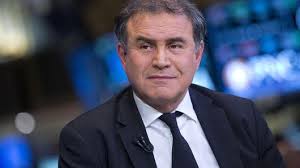
Nouriel Roubini is an American professor of Economics at New York University`s Stern School of Business and chairman of RGE Roubini Global Economics
Thursday, February 4, 2016
Roubini Travelling to Asia
Nouriel Roubini—the
economist who predicted the global recession of 2008—will be travelling
to Hong Kong this March. His rates and travel fees will be reduced.
Nouriel formerly worked for the White House Council of Economic Advisors as a senior economist for international affairs. He is now chairman of Roubini Global Economics. Consistently making Foreign Policy’s “Top 100 Global Thinkers” list, Nouriel is available to speak on the global economic outlook.
http://www.leadingauthorities.com/asia/asia-blog/famed-economist-nouriel-roubini-travelling-to-asia.html

Nouriel Roubini is an American professor of Economics at New York University`s Stern School of Business and chairman of RGE Roubini Global Economics
Nouriel formerly worked for the White House Council of Economic Advisors as a senior economist for international affairs. He is now chairman of Roubini Global Economics. Consistently making Foreign Policy’s “Top 100 Global Thinkers” list, Nouriel is available to speak on the global economic outlook.
http://www.leadingauthorities.com/asia/asia-blog/famed-economist-nouriel-roubini-travelling-to-asia.html
Nouriel Roubini is an American professor of Economics at New York University`s Stern School of Business and chairman of RGE Roubini Global Economics
Wednesday, February 3, 2016
Where is The Global Economy headed
Roubini : Advanced and emerging economies are slowing because of macro imbalances, financial excesses, debt and leverage, lack of structural reform and aging populations. Emerging economies are going to grow at 4-5% compared with 5-6% earlier. This is a new `abnormal' for the global economy .This will continue for a few years with maybe bright spots here and there but they would be exceptions as there are more downside risks than upside risks i ..
Read more at:http://economictimes.indiatimes.com/articleshow/50769126.cms?utm_source=contentofinterest&utm_medium=text&utm_campaign=cppst

Nouriel Roubini is an American professor of Economics at New York University`s Stern School of Business and chairman of RGE Roubini Global Economics
Tuesday, February 2, 2016
Roubini: Markets tend to be manic Depressive
Nouriel Roubini :"Markets tend to be manic depressive, going from excessive optimism to excessive pessimism," he said at a panel discussion at the World Economic Forum in Davos, Switzerland. - in CNBC
Nouriel Roubini is an American professor of Economics at New York University`s Stern School of Business and chairman of RGE Roubini Global Economics
Monday, February 1, 2016
Roubini on China
My view for the last few years on China is that we will have neither a hard nor a soft landing. I would say China is going to have a bumpy landing
The big thing that should happen is China should stop kicking the can down the road and get on with some serious structural reforms.

Nouriel Roubini is an American professor of Economics at New York University`s Stern School of Business and chairman of RGE Roubini Global Economics
Sunday, January 31, 2016
Nouriel Roubini | ET Global Business Summit
Tune in as Arvind Panagariya, Vice Chairman, NITI AYOG & Nouriel Roubini, Chairman, Roubini Global Economics discuss currencies, global trade, economic growth, reforms in India and much more at the ET Global Business Summit.
Fireside Chat - Arvind Panagariya & Nouriel Roubini | ET Global Business Summit
Nouriel Roubini is an American professor of Economics at New York University`s Stern School of Business and chairman of RGE Roubini Global Economics
Fireside Chat - Arvind Panagariya & Nouriel Roubini | ET Global Business Summit
Nouriel Roubini is an American professor of Economics at New York University`s Stern School of Business and chairman of RGE Roubini Global Economics
Roubini : We are in the middle of a riskoff episode
How alarming is the current situation? Is it a repeat of 2008?
Roubini : We are in the middle of a riskoff episode because there are a whole bunch of concerns -China hard landing, its currency and stock market, the Middle East, oil prices, US growth and the fact that the Fed is raising rates above zero and credit markets getting nervous... concerns about Europe. I did expect that some of these shocks will occur. The last time when we had a riskoff episode, where you had a correct ..
Read more at:http://economictimes.indiatimes.com/articleshow/50769126.cms?utm_source=contentofinterest&utm_medium=text&utm_campaign=cppst

Nouriel Roubini is an American professor of Economics at New York University`s Stern School of Business and chairman of RGE Roubini Global Economics
Roubini : We are in the middle of a riskoff episode because there are a whole bunch of concerns -China hard landing, its currency and stock market, the Middle East, oil prices, US growth and the fact that the Fed is raising rates above zero and credit markets getting nervous... concerns about Europe. I did expect that some of these shocks will occur. The last time when we had a riskoff episode, where you had a correct ..
Read more at:http://economictimes.indiatimes.com/articleshow/50769126.cms?utm_source=contentofinterest&utm_medium=text&utm_campaign=cppst

Nouriel Roubini is an American professor of Economics at New York University`s Stern School of Business and chairman of RGE Roubini Global Economics
Friday, January 29, 2016
Roubini : India is doing a number of things well
How do you see the Indian economy? What is the assessment of the new government?
Roubini : India is doing a number of things well. I would like them to do more macro adjustment, to do faster structural reform but at least it is going in the right direction. Overall, the government's performance is a positive one because there have been some macroeconomic adjustments. The fiscal situation is better, the external situation is better. So ma croeconomic improvements are there even if ..
Read more at:http://economictimes.indiatimes.com/articleshow/50769126.cms?utm_source=contentofinterest&utm_medium=text&utm_campaign=cppst

Nouriel Roubini is an American professor of Economics at New York University`s Stern School of Business and chairman of RGE Roubini Global Economics
Roubini : India is doing a number of things well. I would like them to do more macro adjustment, to do faster structural reform but at least it is going in the right direction. Overall, the government's performance is a positive one because there have been some macroeconomic adjustments. The fiscal situation is better, the external situation is better. So ma croeconomic improvements are there even if ..
Read more at:http://economictimes.indiatimes.com/articleshow/50769126.cms?utm_source=contentofinterest&utm_medium=text&utm_campaign=cppst
Nouriel Roubini is an American professor of Economics at New York University`s Stern School of Business and chairman of RGE Roubini Global Economics
Thursday, January 28, 2016
Roubini : Recommends Spam Over Gold
http://www.zerohedge.com/article/roubini-blasts-barbarous-relic-recommends-spam-over-gold
Roubini summarizes the current situation:
In the last nine months, concerns about a global depression have
dissipated and the global economy is recovering from its worst
recession in decade; deflation is still gripping the global economy as
the slack in goods and labor markets persists at high levels. So why
have gold prices started to rise sharply again in the last few months,
in spite of no near-term risk of inflation or of depression? And could
gold prices rapidly rise towards $2000?

Nouriel Roubini is an American professor of Economics at New York University`s Stern School of Business and chairman of RGE Roubini Global Economics
Roubini summarizes the current situation:
dissipated and the global economy is recovering from its worst
recession in decade; deflation is still gripping the global economy as
the slack in goods and labor markets persists at high levels. So why
have gold prices started to rise sharply again in the last few months,
in spite of no near-term risk of inflation or of depression? And could
gold prices rapidly rise towards $2000?
Nouriel Roubini is an American professor of Economics at New York University`s Stern School of Business and chairman of RGE Roubini Global Economics
Wednesday, January 27, 2016
Roubini : Markets tend to be manic Depressive
Nouriel Roubini : “A year ago they were believing in this rhetoric of the Chinese government, that China could achieve a soft landing, that it could maintain growth at 7%, that the Chinese were a bunch of ‘super-heroic technocrats’ who can do no wrong. But now they’re going to another extreme, saying that policy-makers are incompetent.”
Markets tend to be manic depressive .They go from excessive optimism to excessive pessimism

Nouriel Roubini is an American professor of Economics at New York University`s Stern School of Business and chairman of RGE Roubini Global Economics
Tuesday, January 26, 2016
Oil Price : The Fundamentals do not justify Oil at $30
Oil prices can go lower even from current levels but if they’re going lower toward $20 a barrel, I don’t think they can stay there. At that point there’ll be producers that cannot produce profitably and they’re going to cut back on production. By year end, it has to be above $40 because the fundamentals do not justify oil at $30.

Nouriel Roubini is an American professor of Economics at New York University`s Stern School of Business and chairman of RGE Roubini Global Economics
Monday, January 25, 2016
Economic Outlook 2016 (Nouriel Roubini, Chairman at Roubini Global Economics)
Nouriel Roubini, who has served as a financial advisor to the US
Department of the Treasury, and has anticipated the financial crisis
that began in 2007, will give an economic outlook for 2016.
Nouriel Roubini is an American professor of Economics at New York University`s Stern School of Business and chairman of RGE Roubini Global Economics
Nouriel Roubini is an American professor of Economics at New York University`s Stern School of Business and chairman of RGE Roubini Global Economics
Saturday, January 23, 2016
Roubini: Global Economy Not Back to 2008
Nouriel Roubini, NYU professor and chairman at Roubini Global Economics, explains why the global economy isn’t facing the same conditions as 2008, and discusses expectations for the Federal Reserve's rate hike path and how QE is working in Europe. He speaks from the World Economic Forum in Davos, Switzerland on "Bloomberg Surveillance." (Source: Bloomberg)
Nouriel Roubini is an American professor of Economics at New York University`s Stern School of Business and chairman of RGE Roubini Global Economics
Friday, January 22, 2016
Roubini - No, it isn’t 2008 all over again
Markets may be in turmoil, but the current slide doesn’t compare with 2008, says New York University economist Nouriel Roubini.
Nouriel Roubini is an American professor of Economics at New York University`s Stern School of Business and chairman of RGE Roubini Global Economics
Thursday, January 21, 2016
Roubini : China's 'New Normal' is here to stay
"It looks like China's 'new normal' is here to stay," said U.S. economist Nouriel Roubini in another panel on Wednesday.
Markets tend to be manic depressive -- they go from excessive pessimism to excessive optimism," Roubini said.
"What China really needs to do is work on its credibility, transparency and ability to communicate properly about what it's doing," he said.
Nouriel Roubini is an American professor of Economics at New York University`s Stern School of Business and chairman of RGE Roubini Global Economics
ROUBINI: It Is not 2008 Yet ,but ...
http://www.businessinsider.com/noureil-roubini-on-economy-and-markets-2016-1

Nouriel Roubini is an American professor of Economics at New York University`s Stern School of Business and chairman of RGE Roubini Global Economics
Nouriel Roubini: No, I don't expect it's 2008 again. I don't expect a global recession or financial crisis.
The current turmoil is driven by a bunch
of factors, primarily concern that China might have a hard landing and
collapse of its stock market and currency.
My view of China is that it's going to
have a bumpy landing, not a hard landing. Growth this year of 6% going
to 5%. Those who say it's 4% going to zero, I think they're getting it
wrong. They don't realize that the service sector is rising and growing
much faster than the manufacturing sector.
The US is slowing down, especially
manufacturing. And the fall of oil prices is a negative, at least in the
short run, because the US is a major producer of oil and energy. The
fall in oil prices is negative for the markets because the market has a
certain weight coming from oil and energy companies. But more
importantly, it's not just a supply shock that is driving oil prices but
concerns about global demand. China. Emerging markets. And concerns
about weakening demand are a negative sign for the global economy.
The Middle East is a mess. The proxy wars
between Saudi Arabia and Iran are getting worse. And even in Europe,
there's terrorism and the migration crisis, the risk of Grexit, the risk
of Brexit, austerity fatigue in the periphery, bailout fatigue in the
core — there are plenty of issues that can go wrong in Europe. So,
suddenly, the market is becoming nervous and there's a correction.
Whether the correction becomes a true
bear market depends on whether these shocks are more persistent or less
persistent, first. And second on the policy response.
At this point, the PBOC (central bank of
China) will have to ease more. The Chinese will have to do a round of
fiscal stimulus. The Fed will have to signal more clearly they're going
to wait longer before they hike rates again. And the European Central
Bank and the Bank of Japan will have to ease more.
If all central banks try to do more, you
can maybe stop or reverse this particular correction. If you don't have a
strong policy response, this could become an outright economic
slowdown.
Nouriel Roubini is an American professor of Economics at New York University`s Stern School of Business and chairman of RGE Roubini Global Economics
Wednesday, January 20, 2016
Roubini : India can be a bright spot
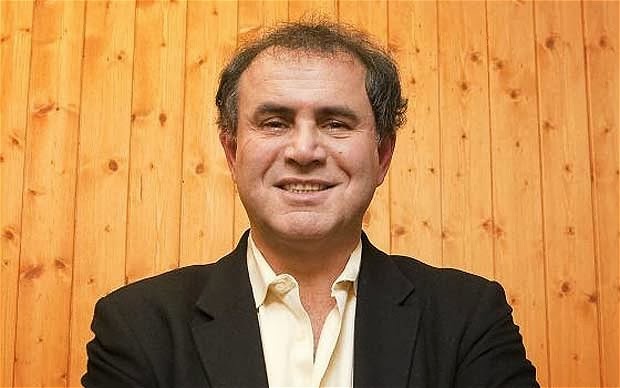
Roubini, who goes by various monikers including "permabear" for his usually circumspect views of things, told ET in an interview that while structural reforms in India were directionally right, the speed of policy changes could be faster.
..
Read more at:
http://economictimes.indiatimes.com/articleshow/50646642.cms?utm_source=contentofinterest&utm_medium=text&utm_campaign=cppst
Nouriel Roubini is an American professor of Economics at New York University`s Stern School of Business and chairman of RGE Roubini Global Economics
Monday, January 18, 2016
Nouriel Roubini Eureka Report
Nouriel Roubini, Dr Doom
James Kirby talks to economist Nouriel Roubini from New York University's Stern School of Business at CHOGM in Perth.
Nouriel Roubini is an American professor of Economics at New York University`s Stern School of Business and chairman of RGE Roubini Global Economics
Sunday, January 17, 2016
This is Who Is Nouriel Roubini
Undergraduate degree, Bocconi Univ.; PhD in Economics, Harvard. 1998-2000, Senior Economist for International Affairs, White House Council of Economic Advisors, then Senior Adviser to the Undersecretary for International Affairs, US Treasury Dept. Consultant to the International Monetary Fund, the World Bank and other public and private institutions. Former Faculty Member, Department of Economics, Yale University. Co-Founder and Chairman, Roubini Global Economics, an innovative economic and geo-strategic information service and consultancy. Professor of Economics, Stern School of Business, New York University. Extensive policy experience as well as broad academic credentials. Author of over 70 theoretical empirical and policy papers on international macroeconomic issues. Commentator on various business news programmes. Co-Author: Political Cycles: Theory and Evidence (1997); Bailouts or Bail-ins? Responding to Financial Crises in Emerging Markets (2004); Crisis Economics - A Crash Course in the Future of Finance (2010).

Nouriel Roubini is an American professor of Economics at New York University`s Stern School of Business and chairman of RGE Roubini Global Economics
Saturday, January 16, 2016
Economic Policies—especially Monetary—have become increasingly Unconventional
The world economy has had a rough start in 2016, and it will continue to be characterized by a new abnormal: in the behavior of growth, of economic policies, of inflation and of key asset prices and financial markets.
First, potential growth in developed markets and emerging markets has fallen, and actual growth will remain below this weak potential. That potential has fallen because of the burden of high private and public debt, population aging—older people tend to save more and invest less—and a variety of uncertainties that keep capital spending low. Meanwhile, technological innovations haven’t translated yet into higher productivity growth at the aggregate level, while structural reforms aren’t moving fast enough to increase potential growth. There’s also “hysteresis”—the way that protracted cyclical stagnation can weigh down potential growth, since human and physical capital become more obsolete if they aren’t used at full capacity.
What actual growth we’ve seen has been anemic, below its potential as a painful process of deleveraging has been under way, first in the U.S., then in Europe and now in emerging markets, to stabilize and reduce high levels of private and public debts and deficits.
At the same time, economic policies—especially monetary—have become increasingly unconventional, and the distinction between monetary and fiscal policy has become more blurred. Ten years ago, who had heard of terms such as ZIRP (zero-interest-rate policy), QE (quantitative easing), CE (credit easing), or UFXInt (unsterilized FX intervention)? These esoteric and unconventional monetary-policy tools are now the norm in most advanced economies, and even some emerging market ones as well.
http://time.com/4180698/nouriel-roubini-global-economy/?xid=tcoshare

Nouriel Roubini is an American professor of Economics at New York University`s Stern School of Business and chairman of RGE Roubini Global Economics
Friday, January 15, 2016
Roubini: The New Abnormal for a Troubled Global Economy
The world economy has had a rough start in 2016, and it will continue to be characterized by a new abnormal: in the behavior of growth, of economic policies, of inflation and of key asset prices and financial markets.
First, potential growth in developed markets and emerging markets has fallen, and actual growth will remain below this weak potential. That potential has fallen because of the burden of high private and public debt, population aging—older people tend to save more and invest less—and a variety of uncertainties that keep capital spending low. Meanwhile, technological innovations haven’t translated yet into higher productivity growth at the aggregate level, while structural reforms aren’t moving fast enough to increase potential growth. There’s also “hysteresis”—the way that protracted cyclical stagnation can weigh down potential growth, since human and physical capital become more obsolete if they aren’t used at full capacity.
http://time.com/4180698/nouriel-roubini-global-economy/

Nouriel Roubini is an American professor of Economics at New York University`s Stern School of Business and chairman of RGE Roubini Global Economics
Thursday, January 14, 2016
Roubini on the cover of the Time Magazine
Nouriel Roubini is on the cover of the special Davos WEF issue of Time magazine this week with my New Abnormal Economy article

Nouriel Roubini is an American professor of Economics at New York University`s Stern School of Business and chairman of RGE Roubini Global Economics
Sunday, January 10, 2016
Scotland, could lead to rupture of the Brexit
http://www.turkishny.com/headline-news/2-headline-news/199425-cin-ve-ukrayna-krizi-dunyayi-tehdit-ediyor#.VpKrUEbPhMk
Economist Roubini Grexit N He listed the possible effects of "if it happened Grexit Britain's EU separation (Brexit) becomes more likely. Compared to a year ago, the likelihood Brexit has increased. Terrorist attacks in Europe and migration crisis, Britain has increased the EU's isolation impulse. Workers' Party in Jeremy Corbyn leadership came to a dissident line towards the EU. Besides, Prime Minister David Cameron, from the EU itself by demanding reforms would not accept even Germany thoroughly cornered. EU for many people in the UK is seen as a sinking ship. " Meanwhile Roubini, pointing to Scotland, could lead to rupture of the Brexit the United Kingdom underlined.

Nouriel Roubini is an American professor of Economics at New York University`s Stern School of Business and chairman of RGE Roubini Global Economics
Economist Roubini Grexit N He listed the possible effects of "if it happened Grexit Britain's EU separation (Brexit) becomes more likely. Compared to a year ago, the likelihood Brexit has increased. Terrorist attacks in Europe and migration crisis, Britain has increased the EU's isolation impulse. Workers' Party in Jeremy Corbyn leadership came to a dissident line towards the EU. Besides, Prime Minister David Cameron, from the EU itself by demanding reforms would not accept even Germany thoroughly cornered. EU for many people in the UK is seen as a sinking ship. " Meanwhile Roubini, pointing to Scotland, could lead to rupture of the Brexit the United Kingdom underlined.

Nouriel Roubini is an American professor of Economics at New York University`s Stern School of Business and chairman of RGE Roubini Global Economics
Tuesday, January 5, 2016
Roubini: Europe’s disintegration could be biggest threat of 2016
NEW YORK (Project Syndicate) — At the cusp of the new year, we face a world in which geopolitical and geo-economic risks are multiplying. Most of the Middle East is ablaze, stoking speculation that a long Sunni-Shia war (like Europe’s Thirty Years’ War between Catholics and Protestants) could be at hand. China’s rise is fueling a wide range of territorial disputes in Asia and challenging America’s strategic leadership in the region. And Russia’s invasion of Ukraine has apparently become a semi-frozen conflict, but one that could reignite at any time.
There is also the chance of another epidemic, as outbreaks of SARS, MERS, Ebola, and other infectious diseases have shown in recent years. Cyber warfare is a looming threat as well, and nonstate actors and groups are creating conflict and chaos from the Middle East to North and Sub-Saharan Africa. Last, but certainly not least, climate change is already causing significant damage, with extreme weather events becoming more frequent and lethal.
Yet it is Europe that may turn out to be the ground zero of geopolitics in 2016.
For starters, a Greek exit from the eurozone may have been only postponed, not prevented, as pension and other structural reforms put the country on a collision course with its European creditors. “Grexit,” in turn, could be the beginning of the end of the euro EURUSD, -0.3131% and monetary union EURUSD, -0.3131% as investors would wonder which member — possibly even a core country (for example, Finland) — will be the next to leave.
If Grexit does occur, the United Kingdom’s exit from the EU may become more likely. Compared to a year ago, the probability of “Brexit” has increased, for several reasons. The recent terrorist attacks in Europe have made the U.K. even more isolationist, as has the migration crisis. Under Jeremy Corbyn’s leadership, Labour is more Euroskeptic. And Prime Minister David Cameron has painted himself into a corner by demanding EU reforms that even the Germans — who are sympathetic to the U.K. — cannot accept. To many in Britain, the EU looks like a sinking ship. .....................(more)
http://www.marketwatch.com/story/europes-disintegration-could-be-biggest-threat-of-2016-2016-01-04?dist=lcountdown
Nouriel Roubini is an American professor of Economics at New York University`s Stern School of Business and chairman of RGE Roubini Global Economics
Monday, January 4, 2016
The Europe Question in 2016
There is also the chance of another epidemic, as outbreaks of SARS, MERS, Ebola, and other infectious diseases have shown in recent years. Cyber-warfare is a looming threat as well, and non-state actors and groups are creating conflict and chaos from the Middle East to North and Sub-Saharan Africa. Last, but certainly not least, climate change is already causing significant damage, with extreme weather events becoming more frequent and lethal.
Support Project Syndicate’s mission
Project Syndicate needs your help to provide readers everywhere equal access to the ideas and debates shaping their lives.
Learn more
Yet it is Europe that may turn out to be the ground zero of geopolitics in 2016. For starters, a Greek exit from the eurozone may have been only postponed, not prevented, as pension and other structural reforms put the country on a collision course with its European creditors. “Grexit,” in turn, could be the beginning of the end of the monetary union, as investors would wonder which member – possibly even a core country (for example, Finland) – will be the next to leave.
Read more at https://www.project-syndicate.org/commentary/europe-disintegration-geopolitical-danger-by-nouriel-roubini-2016-01#ClrPiiwFsBL23iRS.99
Nouriel Roubini is an American professor of Economics at New York University`s Stern School of Business and chairman of RGE Roubini Global Economics
Friday, January 1, 2016
How to Predict the Next Financial Crisis: Finance, Economics, Stock Market (2010)
Nouriel Roubini (born March 29, 1958) is an American economist. He teaches at New York University's Stern School of Business and is the chairman of Roubini Global Economics, an economic consultancy firm.
The child of Iranian Jews, he was born in Turkey and grew up in Italy. After receiving a BA in political economics at Bocconi University, Milan and a doctorate in international economics at Harvard University, he became an academic at Yale and a visiting researcher/advisor at the International Monetary Fund (IMF), the Federal Reserve, World Bank, and Bank of Israel. Much of his early research focused on emerging markets. During the administration of President Bill Clinton, he was a senior economist for the Council of Economic Advisers, later moving to the United States Treasury Department as a senior adviser to Timothy Geithner, who in 2009 became Treasury Secretary.
Roubini is one of few economists who predicted the housing bubble crash of 2007-2008. He warned about the crisis in an IMF position paper in 2006. Roubini's predictions have earned him the nicknames "Dr. Doom" and "permabear" in the media. In 2008, Fortune magazine wrote, "In 2005 Roubini said home prices were riding a speculative wave that would soon sink the economy. Back then the professor was called a Cassandra. Now he's a sage." The New York Times notes that he foresaw "homeowners defaulting on mortgages, trillions of dollars of mortgage-backed securities unraveling worldwide and the global financial system shuddering to a halt."In September 2006, he warned a skeptical IMF that "the United States was likely to face a once-in-a-lifetime housing bust, an oil shock, sharply declining consumer confidence, and, ultimately, a deep recession". Nobel laureate Paul Krugman adds that his once "seemingly outlandish" predictions have been matched "or even exceeded by reality." Syndicated personal finance columnist Eric Tyson was one of the first to document some of the many incorrect predictions made by Roubini.
By highlighting some of his many past predictions as being accurate, Roubini has promoted himself as a major figure in the U.S. and international debate about the economy, and spends much of his time shuttling between meetings with central bank governors and finance ministers in Europe and Asia. Although he is ranked only 512th in terms of lifetime academic citations, he was #4 on Foreign Policy magazine's list of the "top 100 global thinkers." In 2011 and 2012, he was named by Foreign Policy magazine as one of the Top 100 Global Thinkers. In December 2013 Roubini was awarded by Global Thinkers Forum the honorary GTF 2013 Award for Excellence in Global Thinking. He has appeared before Congress, the Council on Foreign Relations, and the World Economic Forum at Davos.
Nouriel Roubini is an American professor of Economics at New York University`s Stern School of Business and chairman of RGE Roubini Global Economics
Thursday, December 31, 2015
Roubini: Oil to pick up in 2016
Dr. Doom at Arab Strategy Forum, Dubai, December 2015.
Nouriel Roubini is an American professor of Economics at New York University`s Stern School of Business and chairman of RGE Roubini Global Economics
Nouriel Roubini is an American professor of Economics at New York University`s Stern School of Business and chairman of RGE Roubini Global Economics
Sunday, December 27, 2015
Open Innovations University: Nouriel Roubini
Open Innovations University! Nouriel Roubini, a Nobel Prize winning
economist, co-founder of Roubini Global Economics, is speaking at
#OI2015 about the future of the labor market.
#futureisherenow #OI2015
Nouriel Roubini is an American professor of Economics at New York University`s Stern School of Business and chairman of RGE Roubini Global Economics
#futureisherenow #OI2015
Nouriel Roubini is an American professor of Economics at New York University`s Stern School of Business and chairman of RGE Roubini Global Economics
Subscribe to:
Posts (Atom)
