Tuesday, January 20, 2015
Nouriel Roubini on a global shift shaping the new context
Nouriel Roubini on a global shift shaping the new context
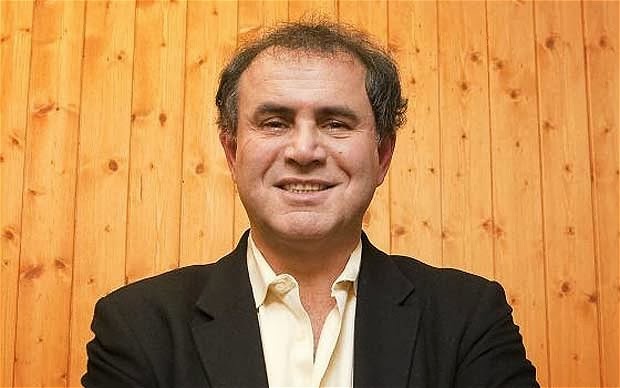
Nouriel Roubini is an American professor of Economics at New York University`s Stern School of Business and chairman of RGE Roubini Global Economics

Monday, January 19, 2015
Monetary Easing is not Purely Zero-Sum

Of course, monetary easing is not purely zero-sum. Easing can boost growth by lifting asset prices (equities and housing), reducing private and public borrowing costs, and limiting the risk of a fall in actual and expected inflation. Given fiscal drag and private deleveraging, lack of sufficient monetary easing in recent years would have led to double and triple dip recession (as occurred, for example, in the eurozone). - in Project Syndicate
Nouriel Roubini is an American professor of Economics at New York University`s Stern School of Business and chairman of RGE Roubini Global Economics
Sunday, January 18, 2015
Nouriel Roubini: Emerging Markets -- American Program Bureau Speakers
One of the most renowned economists of his generation, Dr. Nouriel Roubini is widely recognized for predicting the collapse of the US housing market and the global recession of 2008. An ardent researcher and strategist, Dr. Roubini is an expert on when and why economic crises happen, and was named one of Fortune's "10 new gurus you should know." He has served in a number of important positions, from senior economist for international affairs on the White House Council of Economic Advisors to director of policy development at the US Treasury Department, where he worked on the resolution of the Asian financial crisis of the late '90s and the reform of international financial architecture. The International Monetary Fund, the World Bank, and numerous other prominent public and private institutions have also drawn upon his consulting expertise.
Nouriel Roubini is an American professor of Economics at New York University`s Stern School of Business and chairman of RGE Roubini Global Economics
Saturday, January 17, 2015
The cause of the latest Currency Turmoil is clear
The cause of the latest currency turmoil is clear: In an environment of private and public deleveraging from high debts, monetary policy has become the only available tool to boost demand and growth. Fiscal austerity has exacerbated the impact of deleveraging by exerting a direct and indirect drag on growth. Lower public spending reduces aggregate demand, while declining transfers and higher taxes reduce disposable income and thus private consumption.

In the eurozone, a sudden stop of capital flows to the periphery and the fiscal restraints imposed, with Germany’s backing, by the European Union, the International Monetary Fund, and the ECB have been a massive impediment to growth. In Japan, an excessively front-loaded consumption-tax increase killed the recovery achieved this year. In the US, a budget sequester and other tax and spending policies led to a sharp fiscal drag in 2012-2014. And in the United Kingdom, self-imposed fiscal consolidation weakened growth until this year.
Roubini wrote recently in Project Syndicate
Nouriel Roubini is an American professor of Economics at New York University`s Stern School of Business and chairman of RGE Roubini Global Economics
Friday, January 16, 2015
The Return of Currency Wars by Nouriel Roubini - Project Syndicate

Central banks in China, South Korea, Taiwan, Singapore, and Thailand, fearful of losing competitiveness relative to Japan, are easing their own monetary policies – or will soon ease more. The European Central Bank and the central banks of Switzerland, Sweden, Norway, and a few Central European countries are likely to embrace quantitative easing or use other unconventional policies to prevent their currencies from appreciating.
All of this will lead to a strengthening of the US dollar, as growth in the United States is picking up and the Federal Reserve has signaled that it will begin raising interest rates next year. But, if global growth remains weak and the dollar becomes too strong, even the Fed may decide to raise interest rates later and more slowly to avoid excessive dollar appreciation.
The cause of the latest currency turmoil is clear: In an environment of private and public deleveraging from high debts, monetary policy has become the only available tool to boost demand and growth. Fiscal austerity has exacerbated the impact of deleveraging by exerting a direct and indirect drag on growth. Lower public spending reduces aggregate demand, while declining transfers and higher taxes reduce disposable income and thus private consumption.
Read more at http://www.project-syndicate.org/commentary/world-government-reliance-monetary-policy-by-nouriel-roubini-2014-12#bSZjhMEWZhfSSVZU.99
Nouriel Roubini is an American professor of Economics at New York University`s Stern School of Business and chairman of RGE Roubini Global Economics
Thursday, January 15, 2015
9 Ways the Eurozone is More Fragile than the US
By Nouriel Roubini
I may be best known for predicting the global financial crisis and the housing bust of 2008 — but I made another key economic prediction when I warned of major structural risks threatening the Eurozone in 2006.

At the World Economic Forum in Davos, Switzerland that year, I said that imbalances in the Eurozone would come to a climax — which might lead to a disaster in Europe within 5 years.
http://www.roubinisedge.com/nouriel-unplugged/9-ways-the-eurozone-is-more-fragile-than-the-us
Nouriel Roubini is an American professor of Economics at New York University`s Stern School of Business and chairman of RGE Roubini Global Economics
Wednesday, January 14, 2015
Nouriel Roubini: Cheap Oil won't last
January 13, 2015, 6:32 PM EST E-mail Tweet Facebook Google Plus Linkedin Share icons The falling price of oil continues to be the most important macroeconomic event of the day, with the price of WTI crude declining again to under $45 per barrel Tuesday, the lowest since April 2009. So far, OPEC has declined to cut its production to support prices, and many oil exporting countries … (continue reading)
Nouriel Roubini is an American professor of Economics at New York University`s Stern School of Business and chairman of RGE Roubini Global Economics
Monday, January 12, 2015
Roubini: Risks for `Significant' Credit Bubble
Nouriel Roubini, chairman of Roubini Global
Economics LLC and a professor at New York University's Stern School of
Business, talks about Federal Reserve policy, the global economy and
markets. Roubini speaks with Betty Liu and Josh Wright on Bloomberg
Television's "In the Loop." (Source: Bloomberg)
Nouriel Roubini is an American professor of Economics at New York University`s Stern School of Business and chairman of RGE Roubini Global Economics
Nouriel Roubini is an American professor of Economics at New York University`s Stern School of Business and chairman of RGE Roubini Global Economics
Sunday, January 11, 2015
Foxconn Plans to Replace Workers With Machines: Roubini
Roubini Global Economics’ Nouriel Roubini discusses the future of robotics in the work place.
Nouriel Roubini is an American professor of Economics at New York University`s Stern School of Business and chairman of RGE Roubini Global Economics
Nouriel Roubini is an American professor of Economics at New York University`s Stern School of Business and chairman of RGE Roubini Global Economics
Saturday, January 10, 2015
U.S. and U.K. to Grow 3% in 2015
Dec. 22 -- Roubini Global Economics’ Nouriel Roubini discusses his economic outlook for 2015.
Nouriel Roubini is an American professor of Economics at New York University`s Stern School of Business and chairman of RGE Roubini Global Economics
Nouriel Roubini is an American professor of Economics at New York University`s Stern School of Business and chairman of RGE Roubini Global Economics
Friday, January 9, 2015
Will labor demand keep pace with technological innovation?
NEW
YORK – Technology innovators and CEOs seem positively giddy nowadays
about what the future will bring. New manufacturing technologies have
generated feverish excitement about what some see as a Third Industrial
Revolution. In the years ahead, technological improvements in robotics
and automation will boost productivity and efficiency, implying
significant economic gains for companies. But, unless the proper
policies to nurture job growth are put in place, it remains uncertain
whether demand for labor will continue to grow as technology marches
forward.

Recent
technological advances have three biases: They tend to be
capital-intensive (thus favoring those who already have financial
resources); skill-intensive (thus favoring those who already have a high
level of technical proficiency); and labor-saving (thus reducing the
total number of unskilled and semi-skilled jobs in the economy). The
risk is that robotics and automation will displace workers in
blue-collar manufacturing jobs before the dust of the Third Industrial
Revolution settles.
Read more at http://www.project-syndicate.org/commentary/technology-labor-automation-robotics-by-nouriel-roubini-2014-12#ZKbfb8gl7JwVBpKI.99
Nouriel Roubini is an American professor of Economics at New York University`s Stern School of Business and chairman of RGE Roubini Global Economics
Thursday, January 8, 2015
Job-reducing Technological innovations will affect Education
Likewise, in the next decade, Foxconn, which produces iPhones and other consumer electronics, plans to replace much of its Chinese workforce of more than 1.2 million with robots. And soon enough voice recognition software will replace the call centers of Bangalore and Manila.
Job-reducing technological innovations will affect education, health care, government, and even transportation. For example, will we still need so many teachers in the decades to come if the cream of the profession can produce increasingly sophisticated online courses that millions of students can take? If not, how will all of those former teachers earn a living?
Governments, too, are shedding labor – particularly governments burdened by high deficits and debts. And, by transforming how services are provided to the public, the e-government trend can offset the employment losses with productivity gains.
Even transportation is being revolutionized by technology. In a matter of years, driverless cars – courtesy of Google and others – may render millions of jobs obsolete.
Nouriel Roubini is an American professor of Economics at New York University`s Stern School of Business and chairman of RGE Roubini Global Economics
Wednesday, January 7, 2015
Technology May Render Millions of Jobs Obsolete
Job-reducing technological innovations will affect education, health care, government, and even transportation. For example, will we still need so many teachers in the decades to come if the cream of the profession can produce increasingly sophisticated online courses that millions of students can take? If not, how will all of those former teachers earn a living? Governments, too, are shedding labour—particularly governments burdened by high deficits and debts. And, by transforming how services are provided to the public, the e-government trend can offset the employment losses with productivity gains. Even transportation is being revolutionized by technology. In a matter of years, driverless cars—courtesy of Google and others—may render millions of jobs obsolete.
Nouriel Roubini is an American professor of Economics at New York University`s Stern School of Business and chairman of RGE Roubini Global Economics
Tuesday, January 6, 2015
Where Will All the Workers Go? by Nouriel Roubini

Recent technological advances have three biases: They tend to be capital-intensive (thus favoring those who already have financial resources); skill-intensive (thus favoring those who already have a high level of technical proficiency); and labor-saving (thus reducing the total number of unskilled and semi-skilled jobs in the economy). The risk is that robotics and automation will displace workers in blue-collar manufacturing jobs before the dust of the Third Industrial Revolution settles.
Read more at http://www.project-syndicate.org/commentary/technology-labor-automation-robotics-by-nouriel-roubini-2014-12#vwyI4Yal2lSkdcRt.99
Nouriel Roubini is an American professor of Economics at New York University`s Stern School of Business and chairman of RGE Roubini Global Economics
Monday, January 5, 2015
What happens when automation leads to job losses? By Nouriel Roubini
Technology innovators and CEOs seem positively giddy nowadays about what the future will bring. New manufacturing technologies have generated feverish excitement about what some see as a Third Industrial Revolution. In the years ahead, technological improvements in robotics and automation will boost productivity and efficiency, implying significant economic gains for companies. But, unless the proper policies to nurture job growth are put in place, it remains uncertain whether demand for labor will continue to grow as technology marches forward.
https://agenda.weforum.org/2015/01/what-happens-when-automation-leads-to-job-losses/?utm_content=buffere06a7&utm_medium=social&utm_source=twitter.com&utm_campaign=buffer
Nouriel Roubini is an American professor of Economics at New York University`s Stern School of Business and chairman of RGE Roubini Global Economics
Sunday, January 4, 2015
Robots to threaten Blue Collar Workers
in a recent article for Project Syndicate Roubini writes :

"In the years ahead, technological improvements in robotics and automation will boost productivity and efficiency, implying significant economic gains for companies.""Unless the proper policies to nurture job growth are put in place, it remains uncertain whether demand for labor will continue to grow as technology marches forward," Roubini says."capital-intensive, thus favoring those who already have financial resources; skill-intensive, thus favoring those who already have a high level of technical proficiency; and labor-saving, thus reducing the total number of unskilled and semi-skilled jobs in the economy.""the risk is that robotics and automation will displace workers in blue-collar manufacturing jobs before the dust of the third industrial revolution settles," Roubini writes.
"The gains from technology must be channeled to a broader base of the population than has benefited so far. That requires a major educational component. In order to create broad-based prosperity, workers need the skills to participate in the brave new world implied by a digital economy."
Nouriel Roubini is an American professor of Economics at New York University`s Stern School of Business and chairman of RGE Roubini Global Economics
Friday, January 2, 2015
Nouriel Roubini: U.S. and U.K. Set to Grow 3% in 2015
Dec. 22 -- Roubini Global Economics’ Nouriel Roubini discusses his economic outlook for 2015.
Nouriel Roubini is an American professor of Economics at New York University`s Stern School of Business and chairman of RGE Roubini Global Economics
Nouriel Roubini is an American professor of Economics at New York University`s Stern School of Business and chairman of RGE Roubini Global Economics
Nouriel Roubini: Where Will All the Workers Go?

Recent technological advances have three biases: They tend to be capital-intensive (thus favoring those who already have financial resources); skill-intensive (thus favoring those who already have a high level of technical proficiency); and labor-saving (thus reducing the total number of unskilled and semi-skilled jobs in the economy). The risk is that robotics and automation will displace workers in blue-collar manufacturing jobs before the dust of the Third Industrial Revolution settles.
The rapid development of smart software over the last few decades has been perhaps the most important force shaping the coming manufacturing revolution. Software innovation, together with 3D printing technologies, will open the door to those workers who are educated enough to participate; for everyone else, however, it may feel as though the revolution is happening elsewhere. Indeed, the factory of the future may be 1,000 robots and one worker manning them. Even the shop floor can be swept better and cheaper by a Roomba robot than by any worker.
For the developed countries, this may seem like old news. After all, for the last 30 years, the manufacturing base in Asia’s emerging economies has been displacing that of the old industrial powers of Western Europe and North America. But there is no guarantee that gains in service-sector employment will continue to offset the resulting job losses in industry.
For starters, technology is making even many service jobs tradable, enabling them to be offshored to Asia and other emerging markets. And, eventually, technology will replace manufacturing and service jobs in emerging markets as well.
Today, for example, a patient in New York may have his MRI sent digitally to, say, Bangalore, where a highly skilled radiologist reads it for one-quarter of what a New York-based radiologist would cost. But how long will it be before a computer software can read those images faster, better, and cheaper than the radiologist in Bangalore can?
Likewise, in the next decade, Foxconn, which produces iPhones and other consumer electronics, plans to replace much of its Chinese workforce of more than 1.2 million with robots. And soon enough voice recognition software will replace the call centers of Bangalore and Manila.
Job-reducing technological innovations will affect education, health care, government, and even transportation. For example, will we still need so many teachers in the decades to come if the cream of the profession can produce increasingly sophisticated online courses that millions of students can take? If not, how will all of those former teachers earn a living?
Governments, too, are shedding labor – particularly governments burdened by high deficits and debts. And, by transforming how services are provided to the public, the e-government trend can offset the employment losses with productivity gains.
Even transportation is being revolutionized by technology. In a matter of years, driverless cars – courtesy of Google and others – may render millions of jobs obsolete.
And, of course technological innovation that is capital-intensive and labor-saving is one of the factors – together with the related winner-take-all effects – driving the rise in income and wealth inequality. Rising inequality then becomes a drag on demand and growth (as well as a source of social and political instability), because it distributes income from those who spend more (lower- and middle-income households) to those who save more (high-net-worth individuals and corporate firms).
Obviously, this is not the first time the world has faced such problems, and the past can help to serve as a model for resolving them. Late nineteenth- and early twentieth-century leaders sought to minimize the worst features of industrialization. Child labor was abolished throughout the developed world, working hours and conditions became more humane, and a social safety net was put in place to protect vulnerable workers and stabilize the (often fragile) macroeconomy.
As we begin to seek enlightened solutions to the challenges that the Third Industrial Revolution presents, one overall theme looms large: The gains from technology must be channeled to a broader base of the population than has benefited so far. That requires a major educational component. In order to create broad-based prosperity, workers need the skills to participate in the brave new world implied by a digital economy.
Even that may not be sufficient, in which case it will become necessary to provide permanent income support to those whose jobs are displaced by software and machines. Here, too, we should attend carefully to the lessons of the past.
Read more at http://www.project-syndicate.org/commentary/technology-labor-automation-robotics-by-nouriel-roubini-2014-12#yjFGMjAmJxudSxF6.99
Nouriel Roubini is an American professor of Economics at New York University`s Stern School of Business and chairman of RGE Roubini Global Economics
Thursday, January 1, 2015
Gold is not a means of payment
A currency serves three functions, providing a means of payment, a unit of account, and a store of value. Gold may be a store of value for wealth, but it is not a means of payment; you cannot pay for your groceries with it. Nor is it a unit of account; prices of goods and services, and of financial assets, are not denominated in gold terms.

Nouriel Roubini is an American professor of Economics at New York University`s Stern School of Business and chairman of RGE Roubini Global Economics
Wednesday, December 31, 2014
Roubini -- End of The Commodity Super-Cycle
Noted economics commentator and professor at New York University's Stern School of Business, Nouriel Roubini, speaking to regional journalists at the International Monetary Fund forum at Montego Bay in Jamaica on October 24 Roubini said: “Some people debate whether we are truly at the end of the commodity super cycle or whether it is the end for the super cycle in industrial metals as opposed to energy or other types of soft commodities.
“But certainly commodity prices are going down and not just because China is slowing down, but also because there has been significant new capacity investment by many countries after many years of high prices. This is leading to a glut of new supply and new capacity.
Roubini said an initial analysis of the decline in commodity prices may lead to thinking that this would be good for commodity importers and bad for exporters “That first approximation might be correct, but I think there are a number of caveats worth keeping in mind.
• The first one is that some commodity importers also export commodities. A country like Jamaica produces and exports alumina, as well as coffee, rum and sugar. The softness in commodity prices could impact countries that are net importers of oil;
• Secondly, while the fall in the price of oil is positive for the oil and energy importers, it puts a huge strain on a country like Venezuela that is economically and financially fragile. The PetroCaribe scheme effectively subsidizes the price of oil in the Caribbean and this could be threatened or Venezuela could reduce its oil subsidies to the region. If that were to occur, the falling oil prices would be less of a benefit to the region, because the explicit or implicit subsidy from Venezuela is going to be reduced.”
Nouriel Roubini is an American professor of Economics at New York University`s Stern School of Business and chairman of RGE Roubini Global Economics
Roubini's 2015 Outlook [VIDEO]
Nouriel Roubini on his predictions for 2015, Fed, Possibility of Rate Hike in June 2015, Monetary Easing and politics in Europe, Greece, France.
-- Roubini Global Economics’ Nouriel Roubini discusses his economic outlook for 2015.
Nouriel Roubini is an American professor of Economics at New York University`s Stern School of Business and chairman of RGE Roubini Global Economics
Huge Gap Between Sentiment On Wall Street And The Main Street
"There is a huge gap between sentiment on Wall Street and the main street."

Nouriel Roubini is an American professor of Economics at New York University`s Stern School of Business and chairman of RGE Roubini Global Economics
Tuesday, December 30, 2014
Fed's Liquidity Injections Are Not Creating Credit For The Real Economy
The problem is that the Fed's liquidity injections are not creating credit for the real economy, but rather boosting leverage and risk-taking in financial markets. The issuance of risky junk bonds under loose covenants and with excessively low interest rates is increasing; the stock market is reaching new highs, despite the growth slowdown; and money is flowing to high-yielding emerging markets.

Nouriel Roubini is an American professor of Economics at New York University`s Stern School of Business and chairman of RGE Roubini Global Economics
Monday, December 29, 2014
Stock Market Rally, Asset Bubbles & Crash
“For the next year or so, as long as the economy grows 1.5-2 percent, and you have easy money, this market can go higher. Growth is slow. Earnings growth is also slowing down. Top line and bottom line are not as good as they used to be, but margins are high. They could correct, somehow, over time. This might lead to a generalized credit and equity and asset bubble in the next year or two, followed by a crash.”

Nouriel Roubini is an American professor of Economics at New York University`s Stern School of Business and chairman of RGE Roubini Global Economics
Sunday, December 28, 2014
Roubini worried about high pollution levels in Chinese cities
When you drive around the city of Beijing, you can see people on the street wearing surgical masks, or with scarves covering their nose and mouth to try to reduce the pollution they are forced to inhale.
The situation is so severe that the Chinese government continually monitors the count of particles in the air. On some days, when the particle count is particularly high, cars are banned from the city.
When the number rises above 100, it’s considered dangerous. When I was in Beijing, the readings were at 300.

Nouriel Roubini is an American professor of Economics at New York University`s Stern School of Business and chairman of RGE Roubini Global Economics
Saturday, December 27, 2014
Two years down the line, we could have this shakeout … 2016 I would say
“I think that this frothiness that we have seen in financial markets is likely to continue, from equities to credit to housing, and in a couple of years, most likely, this asset inflation is going to become asset frothiness and eventually an asset and a credit bubble and eventually any bubble ends up in a bust and a crash. I would say that valuations in many markets, whether it’s government bonds or credit, or real estate, or some equity markets, are already stretched. And they’re going to become more stretched as the real economy justifies the slow exit, and all this liquidity is going to go into more asset inflation.
So two years down the line, we could have this shakeout … 2016 I would say.”

Nouriel Roubini is an American professor of Economics at New York University`s Stern School of Business and chairman of RGE Roubini Global Economics
Friday, December 26, 2014
Foxconn Plans to Replace Workers With Machines: Roubini
Dec. 22 (Bloomberg) -- Roubini Global Economics’ Nouriel Roubini discusses the future of robotics in the work place. He speaks on “Market Makers.” (Source: Bloomberg)
Nouriel Roubini is an American professor of Economics at New York University`s Stern School of Business and chairman of RGE Roubini Global Economics
Thursday, December 25, 2014
Roubini discussing the art market with Hoffman on BloombergTV
Dec. 22 (Bloomberg) -- The Fine Art Fund Group Founder and CEO Philip Hoffman discusses investing in art. Roubini Global Economics’ Nouriel Roubini also speaks on “Market Makers.” (Source: Bloomberg)
Nouriel Roubini is an American professor of Economics at New York University`s Stern School of Business and chairman of RGE Roubini Global Economics
Wednesday, December 24, 2014
Nouriel Roubini: U.S. and U.K. Set to Grow 3% in 2015
Dec. 22 -- Roubini Global Economics’ Nouriel Roubini discusses his economic outlook for 2015.
Nouriel Roubini is an American professor of Economics at New York University`s Stern School of Business and chairman of RGE Roubini Global Economics
Tuesday, December 23, 2014
Roubini: On The Eurozone Political Risks in 2015
Dec. 22 (Bloomberg) -- Nouriel Roubini, chairman of Roubini Global Economics LLC and a professor at New York University's Stern School of Business, talks about the outlook for the euro zone, Federal Reserve policy and financial markets. He speaks with Stephanie Ruhle on Bloomberg Television's "Market Makers." (Source: Bloomberg)
Nouriel Roubini is an American professor of Economics at New York University`s Stern School of Business and chairman of RGE Roubini Global Economics
Monday, December 22, 2014
Roubini: U.S. and U.K. Set to Grow 3% in 2015
Dec. 22 -- Roubini Global Economics’ Nouriel Roubini discusses his economic outlook for 2015.
Nouriel Roubini is an American professor of Economics at New York University`s Stern School of Business and chairman of RGE Roubini Global Economics
Nouriel Roubini is an American professor of Economics at New York University`s Stern School of Business and chairman of RGE Roubini Global Economics
We are all Japanese now, In a sense
Such spending offers returns that are certainly higher than the low interest rates that most advanced economies face today, and infrastructure needs are massive in both advanced and emerging economies (with the exception of China, which has overinvested in infrastructure). Moreover, public investment works on both the demand and supply sides. It not only boosts aggregate demand directly; it also expands potential output by increasing the stock of productivity-boosting capital.
Unfortunately, the political economy of austerity has led to sub-optimal outcomes. In a fiscal crunch, the first spending cuts hit productive public investments, because governments prefer to protect current – and often inefficient – spending on public-sector jobs and transfer payments to the private sector. As a result, the global recovery remains anemic in most advanced economies (with the partial exception of the US and the UK) and now also in the major emerging countries, where growth has slowed sharply in the last two years.
The right policies – less fiscal austerity in the short run, more public investment spending, and less reliance on monetary easing – are the opposite of those that have been pursued by the world’s major economies. No wonder global growth keeps on disappointing. In a sense, we are all Japanese now.
Read more at http://www.project-syndicate.org/commentary/world-government-reliance-monetary-policy-by-nouriel-roubini-2014-12#gH0vLFcALhtkFIvT.99
Nouriel Roubini is an American professor of Economics at New York University`s Stern School of Business and chairman of RGE Roubini Global Economics
Sunday, December 21, 2014
Roubini's Edge - Why International Investing Is Important
Hear more from Nouriel Roubini and opt-in to read his latest free e-letter, Nouriel Unplugged, at at www.RoubinisEdge.com
Nouriel Roubini is an American professor of Economics at New York University`s Stern School of Business and chairman of RGE Roubini Global Economics
Nouriel Roubini is an American professor of Economics at New York University`s Stern School of Business and chairman of RGE Roubini Global Economics
Saturday, December 20, 2014
ROUBINI: 'Make No Mistake: The Machines Are Coming'
Last Friday night, I attended the Bloomberg BusinessWeek 85th Anniversary Dinner.
The party was held at the American Museum of Natural History, where Seth Meyers, the former Saturday Night Live star, hosted the evening beneath a massive, life-sized replica of a blue whale.

It was a great honor to be asked by Bloomberg and BusinessWeek to give an official toast during the event, along with my fellow toastmasters Henry Kissinger, Henry Kravis, and Melody Hobson. For my toast, I was asked to select the innovation that I thought created the most disruptive change during the last 85 years.
I decided to speak about the microchip—because the microchip may well replace the human race.
Yes, I’m being intentionally provocative here: but it isn’t just because of my nickname (“Dr. Doom”) that I’ve chosen to find the dark shadow in the silver lining of technical progress.
A few weeks ago, Stephen Hawking, the greatest astrophysicist of our time, gave a provocative speech of his own: Hawking suggested that humans should start thinking about colonizing other planets, because eventually artificial intelligence and robots will replace the human race.
It may sound crazy now—but what seems crazy today may not sound so crazy 25, 50, or 100 years from now.
Nouriel Roubini is an American professor of Economics at New York University`s Stern School of Business and chairman of RGE Roubini Global Economics
Friday, December 19, 2014
Nouriel Roubini: China is at a Critical Tipping Point
Having been among the few to predict that the collapse of the U.S. housing market would lead to a global financial crisis years before disaster struck, economist Nouriel Roubini clearly knows a thing or two about unsustainable growth models. In a recent interview with Credit Suisse, Roubini says that this time, it is China’s economy that is facing a critical tipping point. Can China’s leaders effectively manage the transition from an economy that relies too much on investment to one that is more consumption-driven? Watch the video to hear what Roubini, a professor at New York University’s Stern School of Business and chairman of consulting firm Roubini Global Economics, has to say.
Nouriel Roubini is an American professor of Economics at New York University`s Stern School of Business and chairman of RGE Roubini Global Economics
Thursday, December 18, 2014
Nouriel Roubini Economy, US Dollar, Interest Rates & Gold Prediction 2015
Oct. 29 (Bloomberg) -- Nouriel Roubini, chairman of Roubini Global Economics LLC and a professor at New York University's Stern School of Business,
Nouriel Roubini is an American professor of Economics at New York University`s Stern School of Business and chairman of RGE Roubini Global Economics
Wednesday, December 17, 2014
Roubini Predicted The Russian Ruble Plummeting last month
Nouriel Roubini : RRRRR Russian Ruble Rubble Redux. As we at RGE predicted last month, when the Ruble was closer to 50, the Ruble would test near 70 levels - in Twitter
Nouriel Roubini is an American professor of Economics at New York University`s Stern School of Business and chairman of RGE Roubini Global Economics
Tuesday, December 16, 2014
The cause of the latest Currency Turmoil is clear
The cause of the latest currency turmoil is clear: In an environment of private and public deleveraging from high debts, monetary policy has become the only available tool to boost demand and growth. Fiscal austerity has exacerbated the impact of deleveraging by exerting a direct and indirect drag on growth. Lower public spending reduces aggregate demand, while declining transfers and higher taxes reduce disposable income and thus private consumption. - in project syndicate
Nouriel Roubini is an American professor of Economics at New York University`s Stern School of Business and chairman of RGE Roubini Global Economics
Monday, December 15, 2014
Roubini: The Mother of All Asset Bubbles has begun but Will Not Burst Until 2016
Roubini says, “Next year you might not want to be overweight in U.S. equities. There are other parts of the world that can do better. Japan with its easy yen,” for example. Roubini also warns to stay away from the Eurozone and China. “At this point, I would be neutral or underweight U.S. equities compared to other markets,”
Nouriel Roubini is an American professor of Economics at New York University`s Stern School of Business and chairman of RGE Roubini Global Economics
Sunday, December 14, 2014
Roubini Speech on The Centre for the Study of Financial Innovation 21st Anniversary
The Centre for the Study of Financial Innovation (CSFI) was delighted to welcome renowned economist Nouriel Roubini as the keynote speaker on the occasion of its 21st Anniversary celebrations, which took place on November 11, 2014 at the Guildhall, London.
Dr. Doom – or, as he would prefer, Dr. Reality – offered a tour d’horizon of the global economy’s growth prospects, encompassing China, India and the emerging markets, as well as Japan, the eurozone, UK and USA. He also spoke to the economic challenges created by globalisation, inequality and labour-saving technology – and warned of the threats they might pose to political and social stability.
Nouriel Roubini is an American professor of Economics at New York University`s Stern School of Business and chairman of RGE Roubini Global Economics
Saturday, December 13, 2014
Roubini : Top 5 Economic Risks for 2015
Geopolitical problems lead Nouriel Roubini's list of top economic risks for 2015
Nouriel Roubini gives his global outlook for 2015
Nouriel Roubini is an American professor of Economics at New York University`s Stern School of Business and chairman of RGE Roubini Global Economics
Nouriel Roubini gives his global outlook for 2015
Nouriel Roubini is an American professor of Economics at New York University`s Stern School of Business and chairman of RGE Roubini Global Economics
Friday, December 12, 2014
Roubini : Rise Of The Machines US Economy

Last Friday night, I attended the Bloomberg BusinessWeek 85th Anniversary Dinner.
The party was held at the American Museum of Natural History, where Seth Meyers, the former Saturday Night Live star, hosted the evening beneath a massive, life-sized replica of a blue whale.
The party was packed with the usual collection of highly polished New York media and business types. (The entertainment highlight of the night for me was a charming duet by Lady Gaga and Tony Bennett.)
It was a great honor to be asked by Bloomberg and BusinessWeek to give an official toast during the event, along with my fellow toastmasters Henry Kissinger, Henry Kravis, and Melody Hobson. For my toast, I was asked to select the innovation that I thought created the most disruptive change during the last 85 years.
I decided to speak about the microchip—because the microchip may well replace the human race.
Yes, I’m being intentionally provocative here: but it isn’t just because of my nickname (“Dr. Doom”) that I’ve chosen to find the dark shadow in the silver lining of technical progress.
A few weeks ago, Stephen Hawking, the greatest astrophysicist of our time, gave a provocative speech of his own: Hawking suggested that humans should start thinking about colonizing other planets, because eventually artificial intelligence and robots will replace the human race.
It may sound crazy now—but what seems crazy today may not sound so crazy 25, 50, or 100 years from now.
Read more: http://www.roubinisedge.com/nouriel-unplugged/rise-of-the-machines-downfall-of-the-economy#ixzz3LgGJdzHx
Nouriel Roubini is an American professor of Economics at New York University`s Stern School of Business and chairman of RGE Roubini Global Economics
Thursday, December 11, 2014
Roubini forecasts a swiftly slowing China

Roubini Global Economics, a leading provider of independent, global macroeconomic research, forecasts China’s 2016 GDP growth at 5.4%—well below the current Bloomberg consensus projection of 6.7%.
“Our recent trip to China underscored the myriad challenges facing the Chinese economy, which is now in the midst of a marked slowdown. Efforts to reorient the economy toward domestic consumption are not occurring quickly enough and President Xi Jinping’s stance on the reform question is a matter of considerable speculation,” said Chairman Nouriel Roubini. “The next few quarters will tell us whether he will commit to making serious changes or opt to maintain the status quo.”
Read More @ http://www.macrobusiness.com.au/2014/12/roubini-forecasts-a-swiftly-slowing-china
Nouriel Roubini is an American professor of Economics at New York University`s Stern School of Business and chairman of RGE Roubini Global Economics
Wednesday, December 10, 2014
Q&A with Roubini Managing Director Paul Domjan
Managing Director Paul Domjan gives us a recap of 2014 and discusses key themes for 2015
Nouriel Roubini is an American professor of Economics at New York University`s Stern School of Business and chairman of RGE Roubini Global Economics
Tuesday, December 9, 2014
Roubini: Currency Wars coming, but don't bet on Gold
Roubini. “For now the Fed is not easing, and the dollar is strengthening,” he says. Gold is a hedge against inflation, but Roubini believes there are many assets now that are better and that can provide an income, like real estate, equities and credit. Gold can only provide capital gains. “Real rates are going to go higher so all of the main factors regarding gold indicate that gold will go down.” He says the rate will near $1000 per ounce by the end of 2015. It currently hovers at around $1200 per ounce.
Nouriel Roubini is an American professor of Economics at New York University`s Stern School of Business and chairman of RGE Roubini Global Economics
Monday, December 8, 2014
Roubini on Russia & Emerging Markets in 2015
Nouriel Roubini, American economist (Английская версия)
Nouriel Roubini is an American professor of Economics at New York University`s Stern School of Business and chairman of RGE Roubini Global Economics
Sunday, December 7, 2014
Roubini : not Bullish on US Equities for 2015
“Next year you might not want to be overweight in U.S. equities. There are other parts of the world that can do better. Japan with its easy yen,” for example. Roubini also warns to stay away from the Eurozone and China. “At this point, I would be neutral or underweight U.S. equities compared to other markets,” - in Yahoo Finance
Nouriel Roubini is an American professor of Economics at New York University`s Stern School of Business and chairman of RGE Roubini Global Economics
Saturday, December 6, 2014
We're in an Asset Bubble and it won't pop until 2016
Roubini says, “Next year you might not want to be overweight in U.S. equities. There are other parts of the world that can do better. Japan with its easy yen,” for example. Roubini also warns to stay away from the Eurozone and China. “At this point, I would be neutral or underweight U.S. equities compared to other markets,”
Nouriel Roubini is an American professor of Economics at New York University`s Stern School of Business and chairman of RGE Roubini Global Economics
Nouriel Roubini is an American professor of Economics at New York University`s Stern School of Business and chairman of RGE Roubini Global Economics
Friday, December 5, 2014
Roubini to Yahoo Finance : Prepare for a Currency War
Are we heading towards a currency war?
Prepare for a currency war: Nouriel Roubini
Nouriel Roubini is an American professor of Economics at New York University`s Stern School of Business and chairman of RGE Roubini Global Economics
Thursday, December 4, 2014
You can lead a horse to liquidity, but you can’t make it drink
You can lead a horse to liquidity, but you can’t make it drink. In a world where private aggregate demand is weak and unconventional monetary policy eventually becomes like pushing on a string, the case for slower fiscal consolidation and productive public infrastructure spending is compelling.
Such spending offers returns that are certainly higher than the low interest rates that most advanced economies face today, and infrastructure needs are massive in both advanced and emerging economies (with the exception of China, which has overinvested in infrastructure). Moreover, public investment works on both the demand and supply sides. It not only boosts aggregate demand directly; it also expands potential output by increasing the stock of productivity-boosting capital. - in project syndicate
Nouriel Roubini is an American professor of Economics at New York University`s Stern School of Business and chairman of RGE Roubini Global Economics
Subscribe to:
Posts (Atom)
