Friday, October 2, 2015
Nouriel Roubini: Mideast Needs Diplomacy Not Conflict
In today's "Morning Must Read," Bloomberg’s Vonnie Quinn recaps the op-ed pieces and analyst notes providing insight behind today's headlines, including comments from Nouriel Roubini. She speaks on "Bloomberg Surveillance.” (Source: Bloomberg)
Nouriel Roubini is an American professor of Economics at New York University`s Stern School of Business and chairman of RGE Roubini Global Economics

Thursday, October 1, 2015
The Middle East Meltdown and Global Risk

NEW YORK – Among today’s geopolitical risks, none is greater than the long arc of instability stretching from the Maghreb to the Afghanistan-Pakistan border. With the Arab Spring an increasingly distant memory, the instability along this arc is deepening. Indeed, of the three initial Arab Spring countries, Libya has become a failed state, Egypt has returned to authoritarian rule, and Tunisia is being economically and politically destabilized by terrorist attacks.
The violence and instability of North Africa is now spreading into Sub-Saharan Africa, with the Sahel – one of the world’s poorest and most environmentally damaged regions – now gripped by jihadism, which is also seeping into the Horn of Africa to its east. And, as in Libya, civil wars are raging in Iraq, Syria, Yemen, and Somalia, all of which increasingly look like failed states.
The region’s turmoil (which the United States and its allies, in their pursuit of regime change in Iraq, Libya, Syria, Egypt and elsewhere, helped to fuel) is also undermining previously secure states. The influx of refugees from Syria and Iraq is destabilizing Jordan, Lebanon, and now even Turkey, which is becoming increasingly authoritarian under President Recep Tayyip Erdoğan. Meanwhile, with the conflict between Israel and the Palestinians unresolved, Hamas in Gaza and Hezbollah in Lebanon represent a chronic threat of violent clashes with Israel.
In this fluid regional environment, a great proxy struggle for regional dominance between Sunni Saudi Arabia and Shia Iran is playing out violently in Iraq, Syria, Yemen, Bahrain, and Lebanon. And while the recent nuclear deal with Iran may reduce the proliferation risk, the lifting of economic sanctions on Iran will provide its leaders with more financial resources to support their Shia proxies. Further east, Afghanistan (where the resurgent Taliban could return to power) and Pakistan (where domestic Islamists pose a continued security threat) risk becoming semi-failed states.
And yet, remarkably, even as most of the region began to burn, oil prices collapsed. In the past, geopolitical instability in the region triggered three global recessions. The 1973 Yom Kippur War between Israel and the Arab states caused an oil embargo that tripled prices and led to the stagflation (high unemployment plus inflation) of 1974-1975. The Iranian revolution of 1979 led to another embargo and price shock that triggered the global stagflation of 1980-1982. And the Iraq invasion of Kuwait in 1990 led to another spike in oil prices that triggered the US and global recession of 1990-1991.
Read more at https://www.project-syndicate.org/commentary/middle-east-meltdown-global-risk-by-nouriel-roubini-2015-10#jRtqIpC2x67SHttk.99
Nouriel Roubini is an American professor of Economics at New York University`s Stern School of Business and chairman of RGE Roubini Global Economics
Wednesday, September 30, 2015
Roubini analyzing Kazakhstan Economic Diversification
"In the case of Kazakhstan, I would like to say that there are six key issues and aspects that will allow you to diversify the economy. Firstly, you need to invest in human capital, the so-called physical capital - a knowledge infrastructure. You need to raise its level, if you have a large amount of resources, that's just fine, but you need to redirect the investment and other resources. It is necessary to operate a good balance between the private and the public sector. Anyway, it is necessary to move away from state capitalism in the direction of the more common diversified economy,” -- reports BNews.kz

Nouriel Roubini is an American professor of Economics at New York University`s Stern School of Business and chairman of RGE Roubini Global Economics
Friday, September 25, 2015
Roubini : United Airlines is a bunch of idiots
"United Airlines is a bunch of idiots: they kicked out Nobel Prize Robert Shiller out of plane to Aspen conference because of "overbooking"
said Dr Nouriel Roubini in his twitter account today before he adds " Airlines provide lousy/rude service, treat passengers like cattle, overbook massively & overcharge as consolidation led to near monopoly"

Nouriel Roubini is an American professor of Economics at New York University`s Stern School of Business and chairman of RGE Roubini Global Economics
Monday, September 21, 2015
Some Will Suffer More Than Others
“Some will suffer more than others,” Doctor Nouriel Roubini recently wrote in an op-ed, “but, with a few exceptions lacking systemic importance, widespread distress and crises need not occur.”
Nouriel Roubini is an American professor of Economics at New York University`s Stern School of Business and chairman of RGE Roubini Global Economics
Friday, September 18, 2015
Emerging Markets Slow Down has Led to a Global Financial Market Volatility
"It's a complex global economic situation," Nouriel Roubini, a professor at New York University's Stern School of Business and chairman of consultancy firm Roubini Global Economics, said earlier this month while attending an international economic conference in Italy. "Certainly, China is slowing down. Emerging markets are slowing down. This has led to global financial market volatility – a tightening of financial conditions." -- via http://www.usnews.com/news/articles/2015/09/15/brics-bloc-faces-cloudy-future

Nouriel Roubini is an American professor of Economics at New York University`s Stern School of Business and chairman of RGE Roubini Global Economics
Monday, September 14, 2015
Roubini : Low Growth is Unavoidable
Limits of Monetary Policy and Stimulus - Low growth is unavoidable
Nouriel Roubini, Chairman Roubini Global Economics. Interviewed at the 38th edition of the annual workshop "Intelligence on the World, Europe, and Italy".
A Video By Alex Merced Support Alex Merced AlexMerced.com - LearnEconomicsNow.com - Libertarian101.com.
Nouriel Roubini is an American professor of Economics at New York University`s Stern School of Business and chairman of RGE Roubini Global Economics
Friday, September 11, 2015
Roubini dismisses China scare as false alarm, stuns with optimism
by Ambrose Evans-Pritchard, in Cernobbio, Italy
Telegraph.co.uk

Nouriel Roubini has cast aside his mantle as the lugubrious “Dr Doom” of the global economy, scathingly dismissing market panic over China as “manic depressive” behaviour by ill-informed investors.
“China is not in free-fall,” he told the Ambrosetti forum of world leaders on Lake Como.
Mr Roubini, a professor at New York University, described the alarmist reaction to the Shanghai stock market rout as “excessive, unreasonable and irrational”.
The Shanghai bourse is largely closed to the rest of the world and is thinly owned by Chinese citizens, while the country’s banking system is state-owned and therefore has the entire resources of the Communist regime to avert a financial meltdown.
Continue Reading at Telegraph.co.uk…
Nouriel Roubini is an American professor of Economics at New York University`s Stern School of Business and chairman of RGE Roubini Global Economics
Telegraph.co.uk

Nouriel Roubini has cast aside his mantle as the lugubrious “Dr Doom” of the global economy, scathingly dismissing market panic over China as “manic depressive” behaviour by ill-informed investors.
“China is not in free-fall,” he told the Ambrosetti forum of world leaders on Lake Como.
Mr Roubini, a professor at New York University, described the alarmist reaction to the Shanghai stock market rout as “excessive, unreasonable and irrational”.
The Shanghai bourse is largely closed to the rest of the world and is thinly owned by Chinese citizens, while the country’s banking system is state-owned and therefore has the entire resources of the Communist regime to avert a financial meltdown.
Continue Reading at Telegraph.co.uk…
Nouriel Roubini is an American professor of Economics at New York University`s Stern School of Business and chairman of RGE Roubini Global Economics
Wednesday, September 9, 2015
China Slowdown is neither a hard landing nor a soft landing
The slowdown in China is neither a hard landing or a soft landing, it's a bumpy landing. It could be better managed but growth is not likely to be worse than 6.5% this year and 6% next year.
China is not in free fall.

Nouriel Roubini is an American professor of Economics at New York University`s Stern School of Business and chairman of RGE Roubini Global Economics
Tuesday, September 8, 2015
Roubini : China Slowdown going to be a bumpy
“I think the markets are now becoming slightly too pessimistic about Chinese economic growth and the ability of the policy authorities to manage the growth slowdown, the movements of the currency and stock market,”Dr. Doom told Bloomberg News.
“My view has been all along that the Chinese slowdown is going to be a bumpy, rough landing, but something short of a real hard landing.”

Nouriel Roubini is an American professor of Economics at New York University`s Stern School of Business and chairman of RGE Roubini Global Economics
Saturday, September 5, 2015
Roubini : China is not in Free-fall
"China is not in free-fall," he told the Ambrosetti forum 2015 held at Villa d'Este in Cernobbio on Lake Como in Northern Italy.
"None of this is happening. The slowdown in China is neither a hard landing or a soft landing, it's a bumpy landing. It could be better managed but growth is not likely to be worse than 6.5pc this year and 6pc next year," he added

Nouriel Roubini is an American professor of Economics at New York University`s Stern School of Business and chairman of RGE Roubini Global Economics
Friday, September 4, 2015
Roubini to Bloomberg on The Chinese Slowdown
Roubini : The Markets Are Too Pessimistic About Chinese Growth
Roubini Global Economics Co-founder and Chairman Nouriel Roubini discusses China's slowdown, his strategy for the markets and when the U.S. will raise interest rates. He speaks to Bloomberg's Guy Johnson and Anna Edwards from the Ambrosetti Forum in Cernobbio, Italy. (Source: Bloomberg)
Nouriel Roubini is an American professor of Economics at New York University`s Stern School of Business and chairman of RGE Roubini Global Economics
Roubini Global Economics Co-founder and Chairman Nouriel Roubini discusses China's slowdown, his strategy for the markets and when the U.S. will raise interest rates. He speaks to Bloomberg's Guy Johnson and Anna Edwards from the Ambrosetti Forum in Cernobbio, Italy. (Source: Bloomberg)
Nouriel Roubini is an American professor of Economics at New York University`s Stern School of Business and chairman of RGE Roubini Global Economics
Wednesday, September 2, 2015
Nouriel proposes an early-warning system for Financial Tsunamis
NEW
YORK – Recent market volatility – in emerging and developed economies
alike – is showing once again how badly ratings agencies and investors
can err in assessing countries’ economic and financial vulnerabilities.
Ratings agencies wait too long to spot risks and downgrade countries,
while investors behave like herds, often ignoring the build-up of risk
for too long, before shifting gears abruptly and causing exaggerated
market swings.
Given
the nature of market turmoil, an early-warning system for financial
tsunamis may be difficult to create; but the world needs one today more
than ever. Few people foresaw the subprime crisis of 2008, the risk of
default in the eurozone, or the current turbulence in financial markets
worldwide. Fingers have been pointed at politicians, banks, and
supranational institutions. But ratings agencies and analysts who
misjudged the repayment ability of debtors – including governments –
have gotten off too lightly.
In principle, credit
ratings are based on statistical models of past defaults; in practice,
however, with few national defaults having actually occurred, sovereign
ratings are often a subjective affair. Analysts at ratings agencies
follow developments in the country for which they are responsible and,
when necessary, travel there to review the situation
Read more at http://www.project-syndicate.org/commentary/financial-early-warning-system-by-nouriel-roubini-2015-08#i0wtiAdvcCR4fAsL.99Nouriel Roubini is an American professor of Economics at New York University`s Stern School of Business and chairman of RGE Roubini Global Economics
Tuesday, September 1, 2015
Jay Shambaugh a great choice for the CEA!
Nouriel Roubini : "@CEAChair: Jay Shambaugh is an excellent international macro economist dedicated to public service". Indeed a great choice for the CEA! - via twitter @Nouriel Aug 26

Nouriel Roubini is an American professor of Economics at New York University`s Stern School of Business and chairman of RGE Roubini Global Economics
Monday, August 31, 2015
Roubini : CEA’s loss is the World’s Gain
Nouriel Roubini : "@CEAChair: CEA’s loss is the world’s gain, best wishes Maury https://www.imf.org/external/np/sec/pr/2015/pr15343.htm …" Excellent choice of Maury for IMF Chief Economist job -- Via twitter

Nouriel Roubini is an American professor of Economics at New York University`s Stern School of Business and chairman of RGE Roubini Global Economics
Saturday, August 29, 2015
Brazil should have been downgraded below investment grade last year
Read more at http://www.project-syndicate.org/commentary/financial-early-warning-system-by-nouriel-roubini-2015-08#Bhlurxy2j6VkCPhD.99

Nouriel Roubini is an American professor of Economics at New York University`s Stern School of Business and chairman of RGE Roubini Global Economics
Brazil should have been downgraded below
investment grade last year, as the economy struggled with a widening
fiscal deficit, a growing economy-wide debt burden, and a weak and
worsening business environment. The corruption scandal
at energy giant Petrobras is finally causing ratings agencies to
reassess Brazil, but the move comes too late, and their downgrades
probably will not be sufficient to reflect the true risk. Other emerging
markets also look fragile and at risk of an eventual downgrade.
Nouriel Roubini is an American professor of Economics at New York University`s Stern School of Business and chairman of RGE Roubini Global Economics
Friday, August 28, 2015
IMF Appoints Maurice Obstfeld as Economic Counselor -- Excellent choice!
Nouriel Roubini : IMF Appoints Maurice Obstfeld as Economic Counselor and Director of the IMF's Research Department https://www.imf.org/external/np/sec/pr/2015/pr15343.htm … Excellent choice! - Nouriel via Twitter
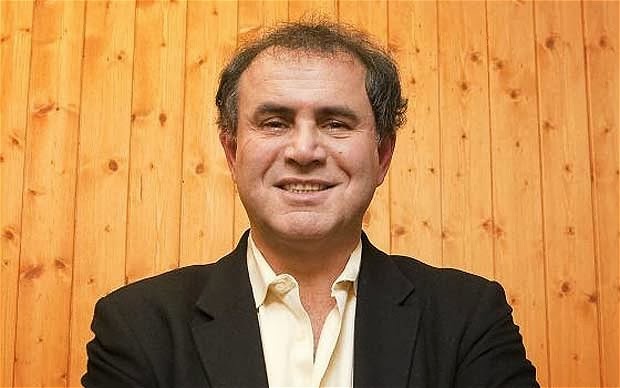
Nouriel Roubini is an American professor of Economics at New York University`s Stern School of Business and chairman of RGE Roubini Global Economics
Thursday, August 27, 2015
A Financial Early-Warning System
NEW
YORK – Recent market volatility – in emerging and developed economies
alike – is showing once again how badly ratings agencies and investors
can err in assessing countries’ economic and financial vulnerabilities.
Ratings agencies wait too long to spot risks and downgrade countries,
while investors behave like herds, often ignoring the build-up of risk
for too long, before shifting gears abruptly and causing exaggerated
market swings.

Given the nature of
market turmoil, an early-warning system for financial tsunamis may be
difficult to create; but the world needs one today more than ever. Few
people foresaw the subprime crisis of 2008, the risk of default in the
eurozone, or the current turbulence in financial markets worldwide.
Fingers have been pointed at politicians, banks, and supranational
institutions. But ratings agencies and analysts who misjudged the
repayment ability of debtors – including governments – have gotten off
too lightly.
In principle, credit
ratings are based on statistical models of past defaults; in practice,
however, with few national defaults having actually occurred, sovereign
ratings are often a subjective affair. Analysts at ratings agencies
follow developments in the country for which they are responsible and,
when necessary, travel there to review the situation.
Read more at http://www.project-syndicate.org/commentary/financial-early-warning-system-by-nouriel-roubini-2015-08#b0VZFUhQsiuWqiER.99
Nouriel Roubini is an American professor of Economics at New York University`s Stern School of Business and chairman of RGE Roubini Global Economics
Tuesday, August 25, 2015
Outlook of the world economy - Roubini Global Economics - National Oil Companies Congress 2013
Nouriel Roubini, Founder and Chairman of Roubini Global Economics gives
his keynote address on 'What is the outlook of the world economy
Nouriel Roubini is an American professor of Economics at New York University`s Stern School of Business and chairman of RGE Roubini Global Economics
Nouriel Roubini is an American professor of Economics at New York University`s Stern School of Business and chairman of RGE Roubini Global Economics
Monday, August 24, 2015
Roubini Predicts The Break-up of The Eurozone
American economist Nouriel Roubini said on Wednesday that the Eurozone will break up unless the member states restore economic growth.
The New York University professor was speaking at a conference organised by IG Metall, Germany's biggest trade union, in Berlin.
He said that the Eurozone was not paying enough attention to job creation and GDP growth, because it was too focused on austerity.
"If I had to propose policies that change that historic road I would say we have to postpone the fiscal austerity in the periphery and do it more gradual, slower rather than faster. In countries like Germany where there is fiscal space instead of doing fiscal austerity now you have to postpone it and you have to do fiscal stimulus," he said.
Roubini went onto say that the fiscal compact will lead to weaker economic growth and deepen recession in the Euro area in 2013.
"And unless we restore that economic growth eventually this crisis is going to get worse and we will have a break up of the Eurozone," he said, "and unfortunately those who are resisting the most, those stimulative policies come in the core of the Eurozone and come in the government of Germany - this resisting policy that would try to restore job creation and job growth in the periphery of Eurozone. So unless we do that eventually the crisis could get worse rather than get better."
Nouriel Roubini is an American professor of Economics at New York University`s Stern School of Business and chairman of RGE Roubini Global Economics
Saturday, August 22, 2015
Nouriel Roubini Says Chinese Economy Will See 'Bumpy Landing'
Nouriel Roubini, chairman of Roubini Global Economics LLC and a professor at New York University's Stern School of Business, talks about the global economy, central bank policies and financial markets. He speaks with Tom Keene, Michael McKee, Brendan Greeley and Vonnie Quinn on Bloomberg Television's "Surveillance." (Source: Bloomberg)
Nouriel Roubini is an American professor of Economics at New York University`s Stern School of Business and chairman of RGE Roubini Global Economics
Friday, August 21, 2015
Low Growth is Unavoidable
Nouriel Roubini, Chairman Roubini Global Economics. Interviewed at the
38th edition of the annual workshop "Intelligence on the World, Europe,
and Italy".
Nouriel Roubini is an American professor of Economics at New York University`s Stern School of Business and chairman of RGE Roubini Global Economics
Nouriel Roubini is an American professor of Economics at New York University`s Stern School of Business and chairman of RGE Roubini Global Economics
Thursday, August 20, 2015
We Are Not Going Back to $100/Barrel Oil
Roubini Global Economics co-founder Nouriel Roubini comments on oil
prices during an interview with Bloomberg's Stephanie Ruhle and Erik
Schatzker at the Milken Global Conference in Beverly Hills, CA.
Nouriel Roubini is an American professor of Economics at New York University`s Stern School of Business and chairman of RGE Roubini Global Economics
Nouriel Roubini is an American professor of Economics at New York University`s Stern School of Business and chairman of RGE Roubini Global Economics
Wednesday, August 19, 2015
Roubini on Rioting in America
What do the Baltimore riots have to do with income inequality in America? Economist Nouriel Roubini breaks it down. ?
Nouriel Roubini is an American professor of Economics at New York University`s Stern School of Business and chairman of RGE Roubini Global Economics
Nouriel Roubini is an American professor of Economics at New York University`s Stern School of Business and chairman of RGE Roubini Global Economics
Tuesday, August 18, 2015
Nouriel Roubini and Deflation
Nouriel Roubini also known as Dr. Doom Nouriel Roubini,decided to ask James Rickards, author of "Currency Wars," why he advocates for a return to the gold ...
Nouriel Roubini is an American professor of Economics at New York University`s Stern School of Business and chairman of RGE Roubini Global Economics
Monday, August 17, 2015
Limits of Monetary Policy and Stimulus - Low Growth is Unavoidable
Nouriel Roubini, Chairman Roubini Global Economics. Interviewed at the 38th edition of the annual workshop "Intelligence on the World, Europe, and Italy".
Nouriel Roubini is an American professor of Economics at New York University`s Stern School of Business and chairman of RGE Roubini Global Economics
Saturday, August 15, 2015
Nouriel Roubini: Time to Close the 'Financial Supermarkets'
NYU economist Nouriel Roubini argues that "too big to fail" bailouts of banking institutions should be followed-up by breaking these companies into smaller, more manageable divisions. Roubini argues that support for increasingly larger financial conglomerates may lead to banks that are "too big to bail out."
-----
In Crisis Economics: A Crash Course in the Future of Finance, Nouriel Roubini - renowned economist and professor of economics at NYU's Stern School of Business - reveals the methods he used to foretell the current financial crisis before other economists saw it coming and shows how those methods can help us make sense of the present and prepare for the future. - Sixth and I Historic Synagogue
Nouriel Roubini is the co-founder and chairman of Roubini Global Economics, an innovative economic and geostrategic information service and consultancy named one of the best economics websites by Business Week, Forbes, the Wall Street Journal and The Economist. He is also a professor of economics at New York University's Stern School of Business.
Dr. Roubini has extensive policy experience as well as broad academic credentials. From 1998 to 2000, he served as the Senior Economist for International Affairs at the White House Council of Economic Advisors and then the Senior Advisor to the Under Secretary for International Affairs at the U.S. Treasury Department, helping to resolve the Asian and global financial crises among other issues.
Nouriel Roubini is an American professor of Economics at New York University`s Stern School of Business and chairman of RGE Roubini Global Economics
Friday, August 14, 2015
Roubini Predicts Markets Collapse in 2016
I think that this frothiness that we have seen in financial markets is likely to continue, from equities to credit to housing, and in a couple of years, most likely, this asset inflation is going to become asset frothiness and eventually an asset and a credit bubble and eventually any bubble ends up in a bust and a crash.
I would say that valuations in many markets, whether it’s government bonds or credit, or real estate, or some equity markets, are already stretched. And they’re going to become more stretched as the real economy justifies the slow exit, and all this liquidity is going to go into more asset inflation. So two years down the line, we could have this shakeout … 2016 I would say.
Nouriel Roubini is an American professor of Economics at New York University`s Stern School of Business and chairman of RGE Roubini Global Economics
Thursday, August 13, 2015
Roubini: We Are Still in Unconventional Monetary Policy
Roubini Global Economics Chairman Nouriel Roubini discusses monetary policy. He speaks on "Bloomberg Surveillance." (Source: Bloomberg)
Nouriel Roubini is an American professor of Economics at New York University`s Stern School of Business and chairman of RGE Roubini Global Economics
Wednesday, August 12, 2015
Roubini : Alternatives to Credit Ratings Agencies already Available
In an op-ed, Professor Nouriel Roubini explains why rating agencies are not equipped to spot the dangers hidden in a shifting global economic scene.
No one said setting up an early warning system for a global financial storm was easy. Among those blamed for failing to spot the 2008 subprime crisis are senior politicians, the world’s biggest banks and several supranational institutions.
However, with the US Federal Reserve and Bank of England likely to raise interest rates, China’s growth slowing and commodity prices falling, we need an effective way to spot the gathering clouds now as much as ever. For many, that means turning to credit rating agencies — despite the fact that they failed to detect signs of crisis on the horizon in the last decade.
Credit rating agencies matter. These private companies assess the ability of debtors, including countries, to repay. Because regulators often defer to their assessments of the risk inherent in holding a particular asset, they in effect dictate what investors can invest in, and how much.
Read full article as published in Financial Times
Nouriel Roubini is an American professor of Economics at New York University`s Stern School of Business and chairman of RGE Roubini Global Economics
Tuesday, August 11, 2015
Roubini: Combination of Factors Weighing on Commodities
Roubini Global Economics Chairman Nouriel Roubini talks about the factors affecting commodity prices and the reduced pricing power of OPEC. He speaks on "Bloomberg Surveillance." (Source: Bloomberg)
Nouriel Roubini is an American professor of Economics at New York University`s Stern School of Business and chairman of RGE Roubini Global Economics
Monday, August 10, 2015
Roubini : Chinese Economy Will See 'Bumpy Landing
Roubini Says Chinese Economy Will See 'Bumpy Landing'
Nouriel Roubini, chairman of Roubini Global Economics LLC and a professor at New York University's Stern School of Business, talks about the global economy, central bank policies and financial markets. He speaks with Tom Keene, Michael McKee, Brendan Greeley and Vonnie Quinn on Bloomberg Television's "Surveillance." (Source: Bloomberg)
Nouriel Roubini is an American professor of Economics at New York University`s Stern School of Business and chairman of RGE Roubini Global Economics
Friday, August 7, 2015
Nouriel Roubini predicts break-up of Eurozone unless economic growth is restored
1. Wide of Nouriel Roubini, New York University Economics Professor, speaking at German union conference
2. Mid of Roubini speaking at podium
3. Mid of audience listening
4. SOUNDBITE (English) Nouriel Roubini, US economist:
"On the US I would say compared to Europe or the UK or Japan that are stagnating or in recession, in relative terms the US is growing but there are economic difficulties, there are social difficulties, there are fiscal and financial difficulties in the United States."
5. Mid of audience listening
6. SOUNDBITE (English) Nouriel Roubini, US economist:
"So what I fear today about the Eurozone is that they don't put job creation and demand and GDP growth in the centre of the policy debate. Is more austerity in the periphery, is more austerity in the core. If I had to propose policies that change that historic road I would say we have to postpone the fiscal austerity in the periphery and do it more gradual, slower rather than faster. In countries like Germany where there is fiscal space instead of doing fiscal austerity now you have to postpone it and you have to do fiscal stimulus."
7. Mid of Roubini speaking
8. Mid of audience listening
9. SOUNDBITE (English) Nouriel Roubini, US economist:
"That fiscal austerity until last year was only in the periphery of the Eurozone but now that the Eurozone has agreed about the fiscal compact you're going to start to see fiscal austerity in Austria, in Germany, in Belgium, in Netherlands, in Finland. So having synchronised austerity both in the core and the periphery, (it) is going to imply weaker economic growth."
10. Mid of a photographer
11. Mid of Roubini speaking
12. SOUNDBITE (English) Nouriel Roubini, US economist:
"And unless we restore that economic growth eventually this crisis is going to get worse and we will have a break up of the Eurozone. And unfortunately those who are resisting the most, those stimulative policies come in the core of the Eurozone and come in the government of Germany - this resisting policy that would try to restore job creation and job growth in the periphery of Eurozone. So unless we do that eventually the crisis could get worse rather than get better."
13. Wide of Roubini speaking
14. Close of Roubini speaking
STORYLINE:
American economist Nouriel Roubini said on Wednesday that the Eurozone will break up unless the member states restore economic growth.
The New York University professor was speaking at a conference organised by IG Metall, Germany's biggest trade union, in Berlin.
He said that the Eurozone was not paying enough attention to job creation and GDP growth, because it was too focused on austerity.
"If I had to propose policies that change that historic road I would say we have to postpone the fiscal austerity in the periphery and do it more gradual, slower rather than faster. In countries like Germany where there is fiscal space instead of doing fiscal austerity now you have to postpone it and you have to do fiscal stimulus," he said.
Roubini went onto say that the fiscal compact will lead to weaker economic growth and deepen recession in the Euro area in 2013.
"And unless we restore that economic growth eventually this crisis is going to get worse and we will have a break up of the Eurozone," he said, "and unfortunately those who are resisting the most, those stimulative policies come in the core of the Eurozone and come in the government of Germany - this resisting policy that would try to restore job creation and job growth in the periphery of Eurozone. So unless we do that eventually the crisis could get worse rather than get better."
You can license this story through AP Archive: http://www.aparchive.com/metadata/you...
Find out more about AP Archive: http://www.aparchive.com/HowWeWork
Nouriel Roubini is an American professor of Economics at New York University`s Stern School of Business and chairman of RGE Roubini Global Economics
Reagan’s economic recovery better than Obama’s?
Roubini Global Economics Chairman Nouriel Roubini on the impact of government policies on economic growth.
Nouriel Roubini is an American professor of Economics at New York University`s Stern School of Business and chairman of RGE Roubini Global Economics
Thursday, August 6, 2015
Roubini on expected US unemployment figures
1. Wide of Nouriel Roubini, New York University Professor of Economics entering news conference
2. Roubini sitting down
3. SOUNDBITE (English) Nouriel Roubini, New York University Professor of Economics:
"Well, the labour market conditions are weak in the US and they''ve been weak for a while, and since the economic growth is well below potential, unemployment rate is going to go higher and the only reason why the unemployment rate has not gone higher in the last few months has been that, in spite of weak job creation, enough people have become so discouraged that they''ve exited the labour market so they don''t even show up as unemployed people."
4. Cutaway Roubini speaking
5. SOUNDBITE (English) Nouriel Roubini, New York University Professor of Economics:
"And if you look not at the unemployment rate, but the employment ratio - the ratio of people unemployed as a fraction of the population - that ratio is now at its 20-30 year low. So every measure of the labour market is now suggesting weakness and I would expect that as economic growth is below potential the labour market is not going to create many jobs."
6. Wide of news conference
7. SOUNDBITE (English) Nouriel Roubini, New York University Professor of Economics:
"Every firm said in a crisis ''in order to survive, thrive and regain profits I have to cut costs, especially labour costs.'' My labour costs are somebody else''s labour income, consumption and demand. So individual actions that are rational like ''I need to survive and thrive'', lead to a macro effect in which the destruction of labour jobs and labour income makes the recovery weaker, doesn''t create enough consumption and then makes the risk of a recession more severe."
8. Cutaway of journalist
9. Wide of news conference
STORYLINE:
American economist Nouriel Roubini expressed his belief that the unemployment rate in the US is going to grow higher as US employment figures are at the lowest in the past 20 to 30 years.
The New York University economist, known as Doctor Doom since predicting the global financial crisis, said on Friday that the US labour market conditions are weak which suggests unemployment rates will grow higher.
"Since the economic growth is well below potential, unemployment rate is going to go higher," Roubini told a news conference after the opening of the Ambrosetti forum on Lake Como in Italy.
As the US Labour Department is poised to release figures for unemployment and the jobless rate in August, Roubini explained that the labour market in the US has entered a vicious circle which will make recession more severe.
"Every firm said in a crisis in order to survive, thrive and gain profits, I have to cut costs, especially labour costs, my labour costs are somebody else''s labour income, consumption, and demand, so individual actions that are rational like ''I need to survive and thrive'' lead to a macro effect in which the destruction of labour jobs and labour income makes the recovery weaker, doesn''t create enough consumption and makes the risk of a recession more severe." explained Roubini.
"My labour costs (referring to businesses) are somebody else''s labour income, consumption and demand. So individual actions that are rational like ''I need to survive and thrive'', lead to a macro effect in which the destruction of labour jobs and labour income makes the recovery weaker," he said.
The US Labour Department is set to announce figures for employment and the jobless rate in August later on Friday.
Find out more about AP Archive: http://www.aparchive.com/HowWeWork
Nouriel Roubini is an American professor of Economics at New York University`s Stern School of Business and chairman of RGE Roubini Global Economics
Wednesday, August 5, 2015
Roubini: 95% of Active Funds Do Worse Than Benchmark
July 30 -- Roubini Global Economics Chairman Nouriel Roubini discusses
his investment ideas. He speaks on "Bloomberg Surveillance."
Nouriel Roubini is an American professor of Economics at New York University`s Stern School of Business and chairman of RGE Roubini Global Economics
Nouriel Roubini is an American professor of Economics at New York University`s Stern School of Business and chairman of RGE Roubini Global Economics
Tuesday, August 4, 2015
Reagan’s economic recovery better than Obama’s?
Roubini’s ‘Smart Beta’ Low Risk, High Return Bet
In an interview with FOX Business Network’s Stuart Varney, world renowned economist Nouriel Roubini compared the differences in President Reagan’s recovery to President Obama’s -- and also offered some investment advice.
“There are a number of differences,” he said. “First of all, Obama entered the worst economic and financial crisis since The Great Depression, when he came to power the stock market was down 70 percent with [an] unemployment rate like we never had before. The economy was tanking, like during The Great Depression … initial starting point was very different.”
Nouriel Roubini is an American professor of Economics at New York University`s Stern School of Business and chairman of RGE Roubini Global Economics
Saturday, August 1, 2015
Nouriel Roubini predicts break-up of Eurozone unless Economic Growth is restored
American economist Nouriel Roubini said on Wednesday that the Eurozone will break up unless the member states restore economic growth.
The New York University professor was speaking at a conference organised by IG Metall, Germany's biggest trade union, in Berlin.
He said that the Eurozone was not paying enough attention to job creation and GDP growth, because it was too focused on austerity.
"If I had to propose policies that change that historic road I would say we have to postpone the fiscal austerity in the periphery and do it more gradual, slower rather than faster. In countries like Germany where there is fiscal space instead of doing fiscal austerity now you have to postpone it and you have to do fiscal stimulus," he said.
Roubini went onto say that the fiscal compact will lead to weaker economic growth and deepen recession in the Euro area in 2013.
"And unless we restore that economic growth eventually this crisis is going to get worse and we will have a break up of the Eurozone," he said, "and unfortunately those who are resisting the most, those stimulative policies come in the core of the Eurozone and come in the government of Germany - this resisting policy that would try to restore job creation and job growth in the periphery of Eurozone. So unless we do that eventually the crisis could get worse rather than get better."
Nouriel Roubini is an American professor of Economics at New York University`s Stern School of Business and chairman of RGE Roubini Global Economics
Friday, July 31, 2015
Roubini explains what is affecting Commodity Prices
Roubini: Combination of Factors Weighing on Commodities
Roubini Global Economics Chairman Nouriel Roubini talks about the factors affecting commodity prices and the reduced pricing power of OPEC. He speaks on "Bloomberg Surveillance." (Source: Bloomberg)
Nouriel Roubini is an American professor of Economics at New York University`s Stern School of Business and chairman of RGE Roubini Global Economics
Thursday, July 30, 2015
Roubini: 95% of Active Funds Do Worse Than Benchmark
July 30 -- Roubini Global Economics Chairman Nouriel Roubini discusses
his investment ideas. He speaks on "Bloomberg Surveillance."
Nouriel Roubini is an American professor of Economics at New York University`s Stern School of Business and chairman of RGE Roubini Global Economics
Nouriel Roubini is an American professor of Economics at New York University`s Stern School of Business and chairman of RGE Roubini Global Economics
Alpha, Beta, and Beyond By Nouriel Roubini

Even in normal times, individual and institutional investors alike have a hard time figuring out where to invest and in what. Should one invest more in advanced or emerging economies? And which ones? How does one decide when, and in what way, to rebalance one’s portfolio?
Obviously, these choices become harder still in abnormal times, when major global changes occur and central banks follow unconventional policies. But a new, low-cost approach promises to ease the challenge confronting investors in normal and abnormal times alike.
In the asset management industry, there have traditionally been two types of investment strategies: passive and active. The passive approach includes investment in indices that track specific benchmarks, say, the S&P 500 for the United States or an index of advanced economies or emerging-market equities. In effect, one buys the index of the market.
Read more @ http://www.azernews.az/analysis/85970.html
Nouriel Roubini is an American professor of Economics at New York University`s Stern School of Business and chairman of RGE Roubini Global Economics
Wednesday, July 29, 2015
Roubini Condemns cute Investment Labels
In a recent interview with the Financial Times, “Nouriel Roubini: Dr Doom condemns cute investment labels”, author Sophia Grene says, “Although he acknowledges there is increasing interest in emerging markets, Mr Roubini is scornful of mnemonics such as Brics, an acronym coined by Jim O’Neill, the former Goldman Sachs chief economist, to put Brazil, Russia, India, China and South Africa in a single category of large developing economies with similar demographics and commodity resources.” - via nasdaq.com

Nouriel Roubini is an American professor of Economics at New York University`s Stern School of Business and chairman of RGE Roubini Global Economics
Tuesday, July 28, 2015
Nouriel Roubini’s secret for beating The Market

Obviously, these choices become harder still in abnormal times, when major global changes occur and central banks follow unconventional policies. But a new, low-cost approach promises to ease the challenge confronting investors in normal and abnormal times alike.
In the asset management industry, there have traditionally been two types of investment strategies: passive and active. The passive approach includes investment in indices that track specific benchmarks, say, the S&P 500 SPX, +0.24% for the United States or an index of advanced economies or emerging-market equities. In effect, one buys the index of the market.
Read More @ http://www.marketwatch.com/story/robert-shillers-secret-for-beating-the-market-2015-07-27?mod=mw_image_twitter
Nouriel Roubini is an American professor of Economics at New York University`s Stern School of Business and chairman of RGE Roubini Global Economics
Monday, July 27, 2015
Roubini : China is at a Critical Tipping Point
Having been among the few to predict that the collapse of the U.S. housing market would lead to a global financial crisis years before disaster struck, economist Nouriel Roubini clearly knows a thing or two about unsustainable growth models. In a recent interview with Credit Suisse, Roubini says that this time, it is China’s economy that is facing a critical tipping point. Can China’s leaders effectively manage the transition from an economy that relies too much on investment to one that is more consumption-driven?
Nouriel Roubini is an American professor of Economics at New York University`s Stern School of Business and chairman of RGE Roubini Global Economics
Saturday, July 25, 2015
Roubini: ‘Pots of Money Will Be Found’ for Greece
The Greek debt crisis is threatening the long-held dream of Europe as a united entity. That dream faces a new test
Nouriel Roubini is an American professor of Economics at New York University`s Stern School of Business and chairman of RGE Roubini Global Economics
Nouriel Roubini is an American professor of Economics at New York University`s Stern School of Business and chairman of RGE Roubini Global Economics
Thursday, July 23, 2015
Nouriel Roubini featured in a Le Monde Article

Nouriel Roubini featured in a Le Monde article as one of the 12 "contemporary prophets". Too kind as others are deeper thinkers http://mobile.lemonde.fr/festival/article/2015/07/22/nouriel-roubini-l-oracle-de-la-crise-financiere_4693307_4415198.html?xtref=http://t.co/z5iJgltSnJ …
Nouriel Roubini is an American professor of Economics at New York University`s Stern School of Business and chairman of RGE Roubini Global Economics
Wednesday, July 22, 2015
Roubini on What Greece needs do next ?
Now that the Greek people have overwhelmingly rejected the terms of the creditors’ proposed cash-for-reforms deal, either a new (short-term) deal will be reached by July 20 (when Greece is due to pay off €3.5 billion in bonds to the ECB) or the government will default on another key institution, dramatically raising the odds of "Grexit" once again.
Nouriel Roubini is an American professor of Economics at New York University`s Stern School of Business and chairman of RGE Roubini Global Economics
Monday, July 20, 2015
Roubini : Grexit would be a Catastrophe
Dr Doom: Grexit would be a catastrophe Nouriel Roubini says the consequences of Greece leaving the euro would harm the global economy - in The Financial Times
Nouriel Roubini is an American professor of Economics at New York University`s Stern School of Business and chairman of RGE Roubini Global Economics
Saturday, July 18, 2015
Roubini : The world economy is flying on one engine
according to acclaimed economist Nouriel Roubini, the “world economy is flying on one engine”
Nouriel Roubini is an American professor of Economics at New York University`s Stern School of Business and chairman of RGE Roubini Global Economics
Friday, July 17, 2015
Barclays Partners With Roubini for Global Stock Indexes
Nouriel Roubini on Twitter : Barclays Partners With ‘Dr. Doom’ for Global Stock Indexes, Barron's http://m.barrons.com/articles/BL-FUNDSB-19092 … Collaboration with my RGE
U.K. banking giant Barclays (UK: BARC) is teaming up with Nouriel Roubini on factor-based stock indexes. These Roubini Barclays Country Insights Indices were developed by Roubini Global Economics...
Nouriel Roubini is an American professor of Economics at New York University`s Stern School of Business and chairman of RGE Roubini Global Economics
Subscribe to:
Posts (Atom)
