The National Balance Sheet Approach
Nouriel Roubini is an American professor of Economics at New York University`s Stern School of Business and chairman of RGE Roubini Global Economics
Monday, November 2, 2015
Roubini GAF
Roubini Global Economics
Nouriel Roubini is an American professor of Economics at New York University`s Stern School of Business and chairman of RGE Roubini Global Economics
Nouriel Roubini is an American professor of Economics at New York University`s Stern School of Business and chairman of RGE Roubini Global Economics

Friday, October 30, 2015
The reemergence of nationalist, nativist populism in Europe is not surprising

The reemergence of nationalist, nativist populism is not surprising: economic stagnation, high unemployment, rising inequality and poverty, lack of opportunity, and fears about migrants and minorities “stealing” jobs and incomes have given such forces a big boost. The backlash against globalization – and the freer movement of goods, services, capital, labor, and technology that comes with it – that has now emerged in many countries is also a boon to illiberal demagogues.
If economic malaise becomes chronic, and employment and wages do not rise soon, populist parties may come closer to power in more European countries. Worse, the eurozone may again be at risk, with a Greek exit eventually causing a domino effect that eventually leads to the eurozone’s breakup. Or a British exit from the EU may trigger European dis-integration, with the additional risks posed by the fact that some countries (the UK, Spain, and Belgium) are at risk of breaking up themselves.-- Roubini in Project Syndicate
Nouriel Roubini is an American professor of Economics at New York University`s Stern School of Business and chairman of RGE Roubini Global Economics
Thursday, October 29, 2015
Roubini : Europe’s Politics of Dystopia

TOKYO
– The recent victory of the conservative Law and Justice (PiS) party in
Poland confirms a recent trend in Europe: the rise of illiberal state
capitalism, led by populist right-wing authoritarians. Call it Putinomics in Russia, Órbanomics in Hungary, Erdoğanomics in Turkey, or a decade of Berlusconomics from which Italy is still recovering. Soon we will no doubt be seeing Kaczyńskinomics in Poland.
All are variations on
the same discordant theme: a nationalist leader comes to power when
economic malaise gives way to chronic and secular stagnation. This
elected authoritarian then starts to reduce political freedoms through
tight-fisted control of the media, especially television. Then, he (so
far, it has always been a man, though France’s Marine Le Pen would fit
the pattern should she ever come to power) pursues an agenda opposing
the European Union (when the country is a member) or other institutions
of supra-national governance.
He will also oppose free trade,
globalization, immigration, and foreign direct investment, while
favoring domestic workers and firms, particularly state-owned
enterprises and private business and financial groups with ties to those
in power. In some cases, outright nativist, racist parties support such
government or provide an even deeper authoritarian and anti-democratic
streak.
Read more at https://www.project-syndicate.org/commentary/europe-far-right-state-capitalism-by-nouriel-roubini-2015-10#uJdMvARFegUbBRFZ.99Nouriel Roubini is an American professor of Economics at New York University`s Stern School of Business and chairman of RGE Roubini Global Economics
Wednesday, October 28, 2015
Roubini dismisses China scare as False Alarm
Nouriel Roubini has cast aside his mantle as
the lugubrious "Dr Doom" of the global economy, scathingly dismissing
market panic over China as "manic depressive" behaviour by ill-informed
investors.
"China is not in free-fall," he told the Ambrosetti forum of world leaders on Lake Como.
Mr Roubini, a professor at New York University, described the alarmist reaction to the Shanghai stock market rout as "excessive, unreasonable and irrational".
The Shanghai bourse is largely closed to the rest of the world and is
thinly owned by Chinese citizens, while the country's banking system is
state-owned and therefore has the entire resources of the Communist
regime to avert a financial meltdown.
Read more @ http://www.telegraph.co.uk/finance/economics/11845194/Nouriel-Roubini-dismisses-China-scare-as-false-alarm-stuns-with-optimism.html

Nouriel Roubini is an American professor of Economics at New York University`s Stern School of Business and chairman of RGE Roubini Global Economics
Read more @ http://www.telegraph.co.uk/finance/economics/11845194/Nouriel-Roubini-dismisses-China-scare-as-false-alarm-stuns-with-optimism.html

Nouriel Roubini is an American professor of Economics at New York University`s Stern School of Business and chairman of RGE Roubini Global Economics
Tuesday, October 27, 2015
Nouriel Speaker At The Global Alpha Forum 2015
Nouriel Roubini To Speak At Global Alpha Forum 2015
Industry Leading Panels & Speakers
Global Alpha Forum provides industry leading content including both topical keynote speakers and issue driven panel discussions. These panels and speakers cover far more than the current state of the alternative investment industry; they take a deep dive into where our sector is moving and cover the latest and biggest trends. Allocator and managers alike will find it extremely productive to explore new directions in fund investing.
Nouriel Roubini is an American professor of Economics at New York University`s Stern School of Business and chairman of RGE Roubini Global Economics
Industry Leading Panels & Speakers
Global Alpha Forum provides industry leading content including both topical keynote speakers and issue driven panel discussions. These panels and speakers cover far more than the current state of the alternative investment industry; they take a deep dive into where our sector is moving and cover the latest and biggest trends. Allocator and managers alike will find it extremely productive to explore new directions in fund investing.
Nouriel Roubini is an American professor of Economics at New York University`s Stern School of Business and chairman of RGE Roubini Global Economics
Monday, October 26, 2015
The Combination of Macro Liquidity & Market Illiquidity is a Time Bomb
"In equity markets, high-frequency traders (HFTs) ... account for a larger share of transactions," he said. "Indeed, trading in the U.S. nowadays is concentrated at the beginning and the last hour of the trading day, when HFTs are most active; for the rest of the day, markets are illiquid, with few transactions."
"This combination of macro liquidity and market illiquidity is a time bomb. So far, it has led only to volatile flash crashes and sudden changes in bond yields and stock prices. But, over time, the longer central banks create liquidity to suppress short-run volatility, the more they will feed price bubbles in equity, bond and other asset markets," he added.
Nouriel Roubini is an American professor of Economics at New York University`s Stern School of Business and chairman of RGE Roubini Global Economics
"This combination of macro liquidity and market illiquidity is a time bomb. So far, it has led only to volatile flash crashes and sudden changes in bond yields and stock prices. But, over time, the longer central banks create liquidity to suppress short-run volatility, the more they will feed price bubbles in equity, bond and other asset markets," he added.
Nouriel Roubini is an American professor of Economics at New York University`s Stern School of Business and chairman of RGE Roubini Global Economics
Saturday, October 24, 2015
Roubini: Mideast Needs Diplomacy Not Conflict
Nouriel Roubini: Mideast Needs Diplomacy Not Conflict - Presented by: The Aol. On Network
Read more: http://www.nasdaq.com/video/nouriel-roubini--mideast-needs-diplomacy-not-conflict-519125421#ixzz3pVTDyOua
In today's "Morning Must Read," Bloomberg’s Vonnie Quinn recaps the op-ed pieces and analyst notes providing insight behind today's headlines, including comments from Nouriel Roubini. She speaks on "Bloomberg Surveillance.” Read more: http://www.nasdaq.com/video/nouriel-roubini--mideast-needs-diplomacy-not-conflict-519125421#ixzz3pVT4v75Y
Nouriel Roubini is an American professor of Economics at New York University`s Stern School of Business and chairman of RGE Roubini Global Economics
In today's "Morning Must Read," Bloomberg’s Vonnie Quinn recaps the op-ed pieces and analyst notes providing insight behind today's headlines, including comments from Nouriel Roubini. She speaks on "Bloomberg Surveillance.” Read more: http://www.nasdaq.com/video/nouriel-roubini--mideast-needs-diplomacy-not-conflict-519125421#ixzz3pVT4v75Y
Nouriel Roubini is an American professor of Economics at New York University`s Stern School of Business and chairman of RGE Roubini Global Economics
Friday, October 23, 2015
Nouriel Roubini To Speak At Global Alpha Forum 2015
Industry Leading Panels & Speakers
Global Alpha Forum provides industry leading content including both topical keynote speakers and issue driven panel discussions. These panels and speakers cover far more than the current state of the alternative investment industry; they take a deep dive into where our sector is moving and cover the latest and biggest trends. Allocator and managers alike will find it extremely productive to explore new directions in fund investing.
Nouriel Roubini is an American professor of Economics at New York University`s Stern School of Business and chairman of RGE Roubini Global Economics
Global Alpha Forum provides industry leading content including both topical keynote speakers and issue driven panel discussions. These panels and speakers cover far more than the current state of the alternative investment industry; they take a deep dive into where our sector is moving and cover the latest and biggest trends. Allocator and managers alike will find it extremely productive to explore new directions in fund investing.
Nouriel Roubini is an American professor of Economics at New York University`s Stern School of Business and chairman of RGE Roubini Global Economics
Thursday, October 22, 2015
Roubini : On China Economy Bumpy Landing
China's economy path will be bumpy, but not a hard landing
Nouriel Roubini, chairman of Roubini Global Economics LLC and a professor at New York University's Stern School of Business, talks about the global economy, central bank policies and financial markets. He speaks with Tom Keene, Michael McKee, Brendan Greeley and Vonnie Quinn on Bloomberg Television's "Surveillance." (Source: Bloomberg)
Nouriel Roubini is an American professor of Economics at New York University`s Stern School of Business and chairman of RGE Roubini Global Economics
Tuesday, October 20, 2015
Roubini Global Economics New Joint Venture with ThoughtWorks360
NEW YORK, NY--(Marketwired - October 12, 2015) - Roubini
Global Economics (RGE), a leading provider of independent, global
macroeconomic research, today announced the formation of a joint venture
with ThoughtWorks360, a thought leadership consultancy, to create a new
enterprise called Roubini ThoughtWorks. The new venture will be founded
in mixed-methods research, applying advanced analytical tools,
predictive models, digital technology, and expert opinion to understand
future megatrends and their impact on business, government, and people
around the world.
Roubini ThoughtWorks will work with clients to deliver innovative thinking to help corporate and government leaders embrace transformative change in today's hyperconnected, digital world. This venture will combine RGE's economic and market expertise with ThoughtWorks360's research, editorial and marketing skills to provide private- and public-sector organizations with analytics-based thought leadership and decision-support programs, thereby inspiring fresh management ideas and delivering actionable insights.
read more @ http://www.marketwired.com/press-release/roubini-global-economics-and-thoughtworks360-partner-to-create-roubini-thoughtworks-2063022.htm

Nouriel Roubini is an American professor of Economics at New York University`s Stern School of Business and chairman of RGE Roubini Global Economics
Roubini ThoughtWorks will work with clients to deliver innovative thinking to help corporate and government leaders embrace transformative change in today's hyperconnected, digital world. This venture will combine RGE's economic and market expertise with ThoughtWorks360's research, editorial and marketing skills to provide private- and public-sector organizations with analytics-based thought leadership and decision-support programs, thereby inspiring fresh management ideas and delivering actionable insights.
read more @ http://www.marketwired.com/press-release/roubini-global-economics-and-thoughtworks360-partner-to-create-roubini-thoughtworks-2063022.htm

Nouriel Roubini is an American professor of Economics at New York University`s Stern School of Business and chairman of RGE Roubini Global Economics
Monday, October 19, 2015
Crisis Economics by Nouriel Roubini Ebook PDF
Crisis Economics by Nouriel Roubini Ebook PDF
Author: Nouriel Roubini
Publish: 2010-05-11
This myth shattering book reveals the methods Nouriel Roubini used to foretell the current crisis before other economists saw it coming and shows how those methods can help us make sense of the present and prepare for the future. Renowned economist Nouriel Roubini electrified his profession and the larger financial community by predicting the current crisis well in advance of anyone else. Unlike most in his profession who treat economic disasters as freakish once-in-a-lifetime events without clear cause, Roubini, after decades of careful research around the world, realized that they were both probable and predictable. Armed with an unconventional blend of historical analysis and global economics, Roubini has forced politicians, policy makers, investors, and market watchers to face a long-neglected truth: financial systems are inherently fragile and prone to collapse. Drawing on the parallels from many countries and centuries, Nouriel Roubini and Stephen Mihm, a professor of economic history and a New York Times Magazine writer, show that financial cataclysms are as old and as ubiquitous as capitalism itself. The last two decades alone have witnessed comparable crises in countries as diverse as Mexico, Thailand, Brazil, Pakistan, and Argentina. All of these crises-not to mention the more sweeping cataclysms such as the Great Depression-have much in common with the current downturn. Bringing lessons of earlier episodes to bear on our present predicament, Roubini and Mihm show how we can recognize and grapple with the inherent instability of the global financial system, understand its pressure points, learn from previous episodes of "irrational exuberance," pinpoint the course of global contagion, and plan for our immediate future. Perhaps most important, the authors-considering theories, statistics, and mathematical models with the skepticism that recent history warrants—explain how the world's economy can get out of the mess we're in, and stay out. In Roubini's shadow, economists and investors are increasingly realizing that they can no longer afford to consider crises the black swans of financial history. A vital and timeless book, Crisis Economics proves calamities to be not only predictable but also preventable and, with the right medicine, curable.
Nouriel Roubini is an American professor of Economics at New York University`s Stern School of Business and chairman of RGE Roubini Global Economics
Saturday, October 17, 2015
Brunello Rosa of Roubini Global Economics gives a message to the youth at Ambrosetti Forum
Nouriel Roubini is an American professor of Economics at New York University`s Stern School of Business and chairman of RGE Roubini Global Economics
Thursday, October 15, 2015
Brazil can avoid The Crisis
"Brazil isn't destined to have a crisis, it's possible to avoid it," Roubini said to Folha "If they make the necessary adjustments, there won't be any further downgrading and confidence in fiscal policy will improve. That will make people more comfortable about spending. The currency has devalued to the point of becoming more competitive, and exports should increase, though not by much, because of the global situation. Midway through next year, inflation should fall, because there will no longer be the effects of the increase of price controls and the recession will make the increase in salaries lower. The Central Bank will thus be able to cut interest rates and that will re-establish some growth. Brazilian GDP is likely to shrink 3% this year, perhaps as much as 4%. In 2016, if adjustments are made, I think there will be recession in the first six months, but the economy will bottom out midway through the year and then begin to recover. Brazil is not destined to have a crisis. There is a way out, although it is difficult and requires political courage from whoever is in power. For things to stabilize, fiscal adjustment is necessary, there's no other way," he added.

Nouriel Roubini is an American professor of Economics at New York University`s Stern School of Business and chairman of RGE Roubini Global Economics
Wednesday, October 14, 2015
Brazil on the Brink of a Precipice Roubini Warns
Nouriel Roubini, one of the few economists who predicted the financial crisis of 2008, has warned, "Brazil is on the brink of a precipice."
Roubini argues that without fiscal adjustment, the country will lose its investment grade rating with other credit rating agencies (as has already happened with Standard and Poor's); borrowing costs will skyrocket; the real will go into freefall and the economy will shrink further still.
But Dr. Apocalypse, as the economist is known for his gloomy predictions, is not entirely pessimistic about Brazil's future. "Brazil isn't destined to have a crisis, it's possible to avoid it," he says. However, he says that for this to occur the country must run a surplus of at least 0.7% in 2016.
He estimates that Brazilian GDP will shrink by around 3% this year and remain stagnant or just slightly positive in 2016, as long as there is adjustment. According to the Focus report, the market expects recession of 2.85% in 2015 and 1% in 2016.
read more @ http://www1.folha.uol.com.br/internacional/en/business/2015/10/1693317-brazil-on-the-brink-of-a-precipice-says-roubini-but-crisis-may-be-averted.shtml

Nouriel Roubini is an American professor of Economics at New York University`s Stern School of Business and chairman of RGE Roubini Global Economics
Tuesday, October 13, 2015
About RGE Roubini Global Economics
Roubini Global Economics is the leading independent, global macroeconomic research firm founded in 2004 by renowned economist Nouriel Roubini. Roubini research combines expert insight with systematic analysis to translate economic, market and policy signals into actionable intelligence for a wide range of financial, corporate and policy professionals. This holistic approach uncovers opportunities and risks before they come to the attention of companies and markets, helping clients arrive at better decisions in a timelier manner. Roubini is headquartered in New York, with offices in London and Singapore.

Nouriel Roubini is an American professor of Economics at New York University`s Stern School of Business and chairman of RGE Roubini Global Economics
Saturday, October 10, 2015
No Sign of a Spike
This time around, instability in the Middle East is far more severe and widespread. But there appears to be no “fear premium” on oil prices; on the contrary, oil prices have declined sharply since 2014. Why?
Perhaps the most important reason is that, unlike in the past, the turmoil in the Middle East has not caused a supply shock. Even in the parts of Iraq now controlled by Islamic State, oil production continues, with output smuggled and sold in foreign markets. And the prospect that sanctions on Iran′s oil exports will be phased out implies significant inflows of foreign direct investment aimed at increasing production and export capacity.

Indeed, there is a global glut of oil. In North America, the shale-energy revolution in the US, Canada′s oil sands, and the prospect of more onshore and offshore oil production in Mexico (now that its energy sector is open to private and foreign investment) have made the continent less dependent on Middle East supplies. Moreover, South America holds vast hydrocarbon reserves, from Colombia all the way to Argentina, as does East Africa, from Kenya all the way to Mozambique.
With the US on the way to achieving energy independence, there is a risk that America and its Western allies will consider the Middle East less strategically important. That belief is wishful thinking: a burning Middle East can destabilise the world in many ways.
First, some of these conflicts may yet lead to an actual supply disruption, as in 1973, 1979, and 1990. Second, civil wars that turn millions of people into refugees will destabilise Europe economically and socially, which is bound to hit the global economy hard. And the economies and societies of frontline states like Lebanon, Jordan, and Turkey, already under severe stress from absorbing millions of such refugees, face even greater risks.
Third, prolonged misery and hopelessness for millions of Arab young people will create a new generation of desperate jihadists who blame the West for their despair. Some will undoubtedly find their way to Europe and the US and stage terrorist attacks.
So, if the West ignores the Middle East or addresses the region′s problems only through military means (the US has spent $2 trillion in its Afghan and Iraqi wars, only to create more instability), rather than relying on diplomacy and financial resources to support growth and job creation, the region′s instability will only worsen. Such a choice would haunt the US and Europe – and thus the global economy – for decades to come.
Nouriel Roubini
© Project Syndicate 2015
Nouriel Roubini is an American professor of Economics at New York University`s Stern School of Business and chairman of RGE Roubini Global Economics
Friday, October 9, 2015
Roubini: We Are Not Going Back to $100/Barrel Oil
April 28 -- RGB Roubini Global Economics co-founder Nouriel Roubini comments on oil prices during an interview with Bloomberg's Stephanie Ruhle and Erik Schatzker at the Milken Global Conference in Beverly Hills, CA.
Nouriel Roubini is an American professor of Economics at New York University`s Stern School of Business and chairman of RGE Roubini Global Economics
Nouriel Roubini is an American professor of Economics at New York University`s Stern School of Business and chairman of RGE Roubini Global Economics
Thursday, October 8, 2015
Roubini : There is a Global glut of Oil
Indeed, there is a global glut of oil. In North America, the shale-energy revolution in the US, Canada′s oil sands, and the prospect of more onshore and offshore oil production in Mexico (now that its energy sector is open to private and foreign investment) have made the continent less dependent on Middle East supplies. Moreover, South America holds vast hydrocarbon reserves, from Colombia all the way to Argentina, as does East Africa, from Kenya all the way to Mozambique.
With the US on the way to achieving energy independence, there is a risk that America and its Western allies will consider the Middle East less strategically important. That belief is wishful thinking: a burning Middle East can destabilise the world in many ways.

Nouriel Roubini is an American professor of Economics at New York University`s Stern School of Business and chairman of RGE Roubini Global Economics
Wednesday, October 7, 2015
Roubini Warns : The violence and instability of North Africa is now spreading into Sub-Saharan Africa
Djibouti: The Middle East Meltdown and Global Risk – Impact of The Horn
 New York (HAN) October 7, 2015 – Public Economic Diplomacy and the prospect of more onshore and offshore oil production in East Africa. Opinion By: Nouriel Roubini. A professor and was Senior Economist for International Affairs in the White House’s Council of Economic Advisers during the Clinton Administration. He has worked for the International Monetary Fund, the US Federal Reserve, and the World Bank.
Among today’s geopolitical risks, none is greater than the long arc of instability stretching from the Maghreb to the Afghanistan-Pakistan border. With the Arab Spring an increasingly distant memory, the instability along this arc is deepening. Indeed, of the three initial Arab Spring countries, Libya has become a failed state, Egypt has returned to authoritarian rule, and Tunisia is being economically and politically destabilized by terrorist attacks.
The violence and instability of North Africa is now spreading into Sub-Saharan Africa, with the Sahel – one of the world’s poorest and most environmentally damaged regions – now gripped by jihadism, which is also seeping into the Horn of Africa to its east. And, as in Libya, civil wars are raging in Iraq, Syria, Yemen, and Somalia, all of which increasingly look like failed states.
The region’s turmoil (which the United States and its allies, in their pursuit of regime change in Iraq, Libya, Syria, Egypt and elsewhere, helped to fuel) is also undermining previously secure states. The influx of refugees from Syria and Iraq is destabilizing Jordan, Lebanon, and now even Turkey, which is becoming increasingly authoritarian under President Recep Tayyip Erdoğan. Meanwhile, with the conflict between Israel and the Palestinians unresolved, Hamas in Gaza and Hezbollah in Lebanon represent a chronic threat of violent clashes with Israel.
- See more at: http://www.geeskaafrika.com/djibouti-the-middle-east-meltdown-and-global-risk-impact-of-the-horn/10061/#sthash.FhFrpBqz.dpuf
Nouriel Roubini is an American professor of Economics at New York University`s Stern School of Business and chairman of RGE Roubini Global Economics

Among today’s geopolitical risks, none is greater than the long arc of instability stretching from the Maghreb to the Afghanistan-Pakistan border. With the Arab Spring an increasingly distant memory, the instability along this arc is deepening. Indeed, of the three initial Arab Spring countries, Libya has become a failed state, Egypt has returned to authoritarian rule, and Tunisia is being economically and politically destabilized by terrorist attacks.
The violence and instability of North Africa is now spreading into Sub-Saharan Africa, with the Sahel – one of the world’s poorest and most environmentally damaged regions – now gripped by jihadism, which is also seeping into the Horn of Africa to its east. And, as in Libya, civil wars are raging in Iraq, Syria, Yemen, and Somalia, all of which increasingly look like failed states.
The region’s turmoil (which the United States and its allies, in their pursuit of regime change in Iraq, Libya, Syria, Egypt and elsewhere, helped to fuel) is also undermining previously secure states. The influx of refugees from Syria and Iraq is destabilizing Jordan, Lebanon, and now even Turkey, which is becoming increasingly authoritarian under President Recep Tayyip Erdoğan. Meanwhile, with the conflict between Israel and the Palestinians unresolved, Hamas in Gaza and Hezbollah in Lebanon represent a chronic threat of violent clashes with Israel.
- See more at: http://www.geeskaafrika.com/djibouti-the-middle-east-meltdown-and-global-risk-impact-of-the-horn/10061/#sthash.FhFrpBqz.dpuf
Nouriel Roubini is an American professor of Economics at New York University`s Stern School of Business and chairman of RGE Roubini Global Economics
Monday, October 5, 2015
Markets Are Too Pessimistic About Chinese Growth: Roubini
Markets Are Too Pessimistic About Chinese Growth: Roubini | 2015-Sep-04 by Bloomberg Global Business
“I think the markets are now becoming slightly too pessimistic about Chinese economic growth and the ability of the policy authorities to manage the growth slowdown, the movements of the currency and stock market,” Roubini told Bloomberg News. “My view has been all along that the Chinese slowdown is going to be a bumpy, rough landing, but something short of a real hard landing.”
Nouriel Roubini is an American professor of Economics at New York University`s Stern School of Business and chairman of RGE Roubini Global Economics
Friday, October 2, 2015
Nouriel Roubini: Mideast Needs Diplomacy Not Conflict
In today's "Morning Must Read," Bloomberg’s Vonnie Quinn recaps the op-ed pieces and analyst notes providing insight behind today's headlines, including comments from Nouriel Roubini. She speaks on "Bloomberg Surveillance.” (Source: Bloomberg)
Nouriel Roubini is an American professor of Economics at New York University`s Stern School of Business and chairman of RGE Roubini Global Economics
Thursday, October 1, 2015
The Middle East Meltdown and Global Risk

NEW YORK – Among today’s geopolitical risks, none is greater than the long arc of instability stretching from the Maghreb to the Afghanistan-Pakistan border. With the Arab Spring an increasingly distant memory, the instability along this arc is deepening. Indeed, of the three initial Arab Spring countries, Libya has become a failed state, Egypt has returned to authoritarian rule, and Tunisia is being economically and politically destabilized by terrorist attacks.
The violence and instability of North Africa is now spreading into Sub-Saharan Africa, with the Sahel – one of the world’s poorest and most environmentally damaged regions – now gripped by jihadism, which is also seeping into the Horn of Africa to its east. And, as in Libya, civil wars are raging in Iraq, Syria, Yemen, and Somalia, all of which increasingly look like failed states.
The region’s turmoil (which the United States and its allies, in their pursuit of regime change in Iraq, Libya, Syria, Egypt and elsewhere, helped to fuel) is also undermining previously secure states. The influx of refugees from Syria and Iraq is destabilizing Jordan, Lebanon, and now even Turkey, which is becoming increasingly authoritarian under President Recep Tayyip Erdoğan. Meanwhile, with the conflict between Israel and the Palestinians unresolved, Hamas in Gaza and Hezbollah in Lebanon represent a chronic threat of violent clashes with Israel.
In this fluid regional environment, a great proxy struggle for regional dominance between Sunni Saudi Arabia and Shia Iran is playing out violently in Iraq, Syria, Yemen, Bahrain, and Lebanon. And while the recent nuclear deal with Iran may reduce the proliferation risk, the lifting of economic sanctions on Iran will provide its leaders with more financial resources to support their Shia proxies. Further east, Afghanistan (where the resurgent Taliban could return to power) and Pakistan (where domestic Islamists pose a continued security threat) risk becoming semi-failed states.
And yet, remarkably, even as most of the region began to burn, oil prices collapsed. In the past, geopolitical instability in the region triggered three global recessions. The 1973 Yom Kippur War between Israel and the Arab states caused an oil embargo that tripled prices and led to the stagflation (high unemployment plus inflation) of 1974-1975. The Iranian revolution of 1979 led to another embargo and price shock that triggered the global stagflation of 1980-1982. And the Iraq invasion of Kuwait in 1990 led to another spike in oil prices that triggered the US and global recession of 1990-1991.
Read more at https://www.project-syndicate.org/commentary/middle-east-meltdown-global-risk-by-nouriel-roubini-2015-10#jRtqIpC2x67SHttk.99
Nouriel Roubini is an American professor of Economics at New York University`s Stern School of Business and chairman of RGE Roubini Global Economics
Wednesday, September 30, 2015
Roubini analyzing Kazakhstan Economic Diversification
"In the case of Kazakhstan, I would like to say that there are six key issues and aspects that will allow you to diversify the economy. Firstly, you need to invest in human capital, the so-called physical capital - a knowledge infrastructure. You need to raise its level, if you have a large amount of resources, that's just fine, but you need to redirect the investment and other resources. It is necessary to operate a good balance between the private and the public sector. Anyway, it is necessary to move away from state capitalism in the direction of the more common diversified economy,” -- reports BNews.kz

Nouriel Roubini is an American professor of Economics at New York University`s Stern School of Business and chairman of RGE Roubini Global Economics
Friday, September 25, 2015
Roubini : United Airlines is a bunch of idiots
"United Airlines is a bunch of idiots: they kicked out Nobel Prize Robert Shiller out of plane to Aspen conference because of "overbooking"
said Dr Nouriel Roubini in his twitter account today before he adds " Airlines provide lousy/rude service, treat passengers like cattle, overbook massively & overcharge as consolidation led to near monopoly"

Nouriel Roubini is an American professor of Economics at New York University`s Stern School of Business and chairman of RGE Roubini Global Economics
Monday, September 21, 2015
Some Will Suffer More Than Others
“Some will suffer more than others,” Doctor Nouriel Roubini recently wrote in an op-ed, “but, with a few exceptions lacking systemic importance, widespread distress and crises need not occur.”
Nouriel Roubini is an American professor of Economics at New York University`s Stern School of Business and chairman of RGE Roubini Global Economics
Friday, September 18, 2015
Emerging Markets Slow Down has Led to a Global Financial Market Volatility
"It's a complex global economic situation," Nouriel Roubini, a professor at New York University's Stern School of Business and chairman of consultancy firm Roubini Global Economics, said earlier this month while attending an international economic conference in Italy. "Certainly, China is slowing down. Emerging markets are slowing down. This has led to global financial market volatility – a tightening of financial conditions." -- via http://www.usnews.com/news/articles/2015/09/15/brics-bloc-faces-cloudy-future

Nouriel Roubini is an American professor of Economics at New York University`s Stern School of Business and chairman of RGE Roubini Global Economics
Monday, September 14, 2015
Roubini : Low Growth is Unavoidable
Limits of Monetary Policy and Stimulus - Low growth is unavoidable
Nouriel Roubini, Chairman Roubini Global Economics. Interviewed at the 38th edition of the annual workshop "Intelligence on the World, Europe, and Italy".
A Video By Alex Merced Support Alex Merced AlexMerced.com - LearnEconomicsNow.com - Libertarian101.com.
Nouriel Roubini is an American professor of Economics at New York University`s Stern School of Business and chairman of RGE Roubini Global Economics
Friday, September 11, 2015
Roubini dismisses China scare as false alarm, stuns with optimism
by Ambrose Evans-Pritchard, in Cernobbio, Italy
Telegraph.co.uk

Nouriel Roubini has cast aside his mantle as the lugubrious “Dr Doom” of the global economy, scathingly dismissing market panic over China as “manic depressive” behaviour by ill-informed investors.
“China is not in free-fall,” he told the Ambrosetti forum of world leaders on Lake Como.
Mr Roubini, a professor at New York University, described the alarmist reaction to the Shanghai stock market rout as “excessive, unreasonable and irrational”.
The Shanghai bourse is largely closed to the rest of the world and is thinly owned by Chinese citizens, while the country’s banking system is state-owned and therefore has the entire resources of the Communist regime to avert a financial meltdown.
Continue Reading at Telegraph.co.uk…
Nouriel Roubini is an American professor of Economics at New York University`s Stern School of Business and chairman of RGE Roubini Global Economics
Telegraph.co.uk

Nouriel Roubini has cast aside his mantle as the lugubrious “Dr Doom” of the global economy, scathingly dismissing market panic over China as “manic depressive” behaviour by ill-informed investors.
“China is not in free-fall,” he told the Ambrosetti forum of world leaders on Lake Como.
Mr Roubini, a professor at New York University, described the alarmist reaction to the Shanghai stock market rout as “excessive, unreasonable and irrational”.
The Shanghai bourse is largely closed to the rest of the world and is thinly owned by Chinese citizens, while the country’s banking system is state-owned and therefore has the entire resources of the Communist regime to avert a financial meltdown.
Continue Reading at Telegraph.co.uk…
Nouriel Roubini is an American professor of Economics at New York University`s Stern School of Business and chairman of RGE Roubini Global Economics
Wednesday, September 9, 2015
China Slowdown is neither a hard landing nor a soft landing
The slowdown in China is neither a hard landing or a soft landing, it's a bumpy landing. It could be better managed but growth is not likely to be worse than 6.5% this year and 6% next year.
China is not in free fall.

Nouriel Roubini is an American professor of Economics at New York University`s Stern School of Business and chairman of RGE Roubini Global Economics
Tuesday, September 8, 2015
Roubini : China Slowdown going to be a bumpy
“I think the markets are now becoming slightly too pessimistic about Chinese economic growth and the ability of the policy authorities to manage the growth slowdown, the movements of the currency and stock market,”Dr. Doom told Bloomberg News.
“My view has been all along that the Chinese slowdown is going to be a bumpy, rough landing, but something short of a real hard landing.”

Nouriel Roubini is an American professor of Economics at New York University`s Stern School of Business and chairman of RGE Roubini Global Economics
Saturday, September 5, 2015
Roubini : China is not in Free-fall
"China is not in free-fall," he told the Ambrosetti forum 2015 held at Villa d'Este in Cernobbio on Lake Como in Northern Italy.
"None of this is happening. The slowdown in China is neither a hard landing or a soft landing, it's a bumpy landing. It could be better managed but growth is not likely to be worse than 6.5pc this year and 6pc next year," he added

Nouriel Roubini is an American professor of Economics at New York University`s Stern School of Business and chairman of RGE Roubini Global Economics
Friday, September 4, 2015
Roubini to Bloomberg on The Chinese Slowdown
Roubini : The Markets Are Too Pessimistic About Chinese Growth
Roubini Global Economics Co-founder and Chairman Nouriel Roubini discusses China's slowdown, his strategy for the markets and when the U.S. will raise interest rates. He speaks to Bloomberg's Guy Johnson and Anna Edwards from the Ambrosetti Forum in Cernobbio, Italy. (Source: Bloomberg)
Nouriel Roubini is an American professor of Economics at New York University`s Stern School of Business and chairman of RGE Roubini Global Economics
Roubini Global Economics Co-founder and Chairman Nouriel Roubini discusses China's slowdown, his strategy for the markets and when the U.S. will raise interest rates. He speaks to Bloomberg's Guy Johnson and Anna Edwards from the Ambrosetti Forum in Cernobbio, Italy. (Source: Bloomberg)
Nouriel Roubini is an American professor of Economics at New York University`s Stern School of Business and chairman of RGE Roubini Global Economics
Wednesday, September 2, 2015
Nouriel proposes an early-warning system for Financial Tsunamis
NEW
YORK – Recent market volatility – in emerging and developed economies
alike – is showing once again how badly ratings agencies and investors
can err in assessing countries’ economic and financial vulnerabilities.
Ratings agencies wait too long to spot risks and downgrade countries,
while investors behave like herds, often ignoring the build-up of risk
for too long, before shifting gears abruptly and causing exaggerated
market swings.
Given
the nature of market turmoil, an early-warning system for financial
tsunamis may be difficult to create; but the world needs one today more
than ever. Few people foresaw the subprime crisis of 2008, the risk of
default in the eurozone, or the current turbulence in financial markets
worldwide. Fingers have been pointed at politicians, banks, and
supranational institutions. But ratings agencies and analysts who
misjudged the repayment ability of debtors – including governments –
have gotten off too lightly.
In principle, credit
ratings are based on statistical models of past defaults; in practice,
however, with few national defaults having actually occurred, sovereign
ratings are often a subjective affair. Analysts at ratings agencies
follow developments in the country for which they are responsible and,
when necessary, travel there to review the situation
Read more at http://www.project-syndicate.org/commentary/financial-early-warning-system-by-nouriel-roubini-2015-08#i0wtiAdvcCR4fAsL.99Nouriel Roubini is an American professor of Economics at New York University`s Stern School of Business and chairman of RGE Roubini Global Economics
Tuesday, September 1, 2015
Jay Shambaugh a great choice for the CEA!
Nouriel Roubini : "@CEAChair: Jay Shambaugh is an excellent international macro economist dedicated to public service". Indeed a great choice for the CEA! - via twitter @Nouriel Aug 26

Nouriel Roubini is an American professor of Economics at New York University`s Stern School of Business and chairman of RGE Roubini Global Economics
Monday, August 31, 2015
Roubini : CEA’s loss is the World’s Gain
Nouriel Roubini : "@CEAChair: CEA’s loss is the world’s gain, best wishes Maury https://www.imf.org/external/np/sec/pr/2015/pr15343.htm …" Excellent choice of Maury for IMF Chief Economist job -- Via twitter

Nouriel Roubini is an American professor of Economics at New York University`s Stern School of Business and chairman of RGE Roubini Global Economics
Saturday, August 29, 2015
Brazil should have been downgraded below investment grade last year
Read more at http://www.project-syndicate.org/commentary/financial-early-warning-system-by-nouriel-roubini-2015-08#Bhlurxy2j6VkCPhD.99

Nouriel Roubini is an American professor of Economics at New York University`s Stern School of Business and chairman of RGE Roubini Global Economics
Brazil should have been downgraded below
investment grade last year, as the economy struggled with a widening
fiscal deficit, a growing economy-wide debt burden, and a weak and
worsening business environment. The corruption scandal
at energy giant Petrobras is finally causing ratings agencies to
reassess Brazil, but the move comes too late, and their downgrades
probably will not be sufficient to reflect the true risk. Other emerging
markets also look fragile and at risk of an eventual downgrade.
Nouriel Roubini is an American professor of Economics at New York University`s Stern School of Business and chairman of RGE Roubini Global Economics
Friday, August 28, 2015
IMF Appoints Maurice Obstfeld as Economic Counselor -- Excellent choice!
Nouriel Roubini : IMF Appoints Maurice Obstfeld as Economic Counselor and Director of the IMF's Research Department https://www.imf.org/external/np/sec/pr/2015/pr15343.htm … Excellent choice! - Nouriel via Twitter
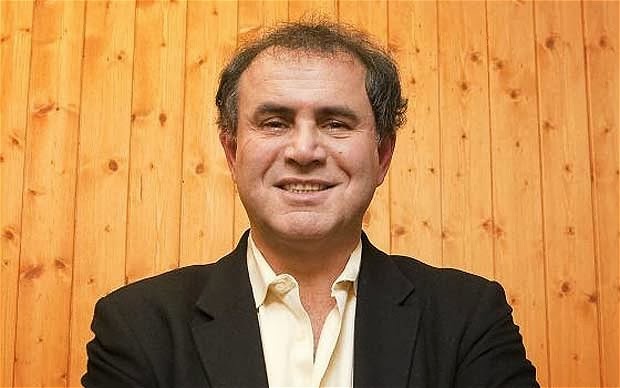
Nouriel Roubini is an American professor of Economics at New York University`s Stern School of Business and chairman of RGE Roubini Global Economics
Thursday, August 27, 2015
A Financial Early-Warning System
NEW
YORK – Recent market volatility – in emerging and developed economies
alike – is showing once again how badly ratings agencies and investors
can err in assessing countries’ economic and financial vulnerabilities.
Ratings agencies wait too long to spot risks and downgrade countries,
while investors behave like herds, often ignoring the build-up of risk
for too long, before shifting gears abruptly and causing exaggerated
market swings.

Given the nature of
market turmoil, an early-warning system for financial tsunamis may be
difficult to create; but the world needs one today more than ever. Few
people foresaw the subprime crisis of 2008, the risk of default in the
eurozone, or the current turbulence in financial markets worldwide.
Fingers have been pointed at politicians, banks, and supranational
institutions. But ratings agencies and analysts who misjudged the
repayment ability of debtors – including governments – have gotten off
too lightly.
In principle, credit
ratings are based on statistical models of past defaults; in practice,
however, with few national defaults having actually occurred, sovereign
ratings are often a subjective affair. Analysts at ratings agencies
follow developments in the country for which they are responsible and,
when necessary, travel there to review the situation.
Read more at http://www.project-syndicate.org/commentary/financial-early-warning-system-by-nouriel-roubini-2015-08#b0VZFUhQsiuWqiER.99
Nouriel Roubini is an American professor of Economics at New York University`s Stern School of Business and chairman of RGE Roubini Global Economics
Tuesday, August 25, 2015
Outlook of the world economy - Roubini Global Economics - National Oil Companies Congress 2013
Nouriel Roubini, Founder and Chairman of Roubini Global Economics gives
his keynote address on 'What is the outlook of the world economy
Nouriel Roubini is an American professor of Economics at New York University`s Stern School of Business and chairman of RGE Roubini Global Economics
Nouriel Roubini is an American professor of Economics at New York University`s Stern School of Business and chairman of RGE Roubini Global Economics
Monday, August 24, 2015
Roubini Predicts The Break-up of The Eurozone
American economist Nouriel Roubini said on Wednesday that the Eurozone will break up unless the member states restore economic growth.
The New York University professor was speaking at a conference organised by IG Metall, Germany's biggest trade union, in Berlin.
He said that the Eurozone was not paying enough attention to job creation and GDP growth, because it was too focused on austerity.
"If I had to propose policies that change that historic road I would say we have to postpone the fiscal austerity in the periphery and do it more gradual, slower rather than faster. In countries like Germany where there is fiscal space instead of doing fiscal austerity now you have to postpone it and you have to do fiscal stimulus," he said.
Roubini went onto say that the fiscal compact will lead to weaker economic growth and deepen recession in the Euro area in 2013.
"And unless we restore that economic growth eventually this crisis is going to get worse and we will have a break up of the Eurozone," he said, "and unfortunately those who are resisting the most, those stimulative policies come in the core of the Eurozone and come in the government of Germany - this resisting policy that would try to restore job creation and job growth in the periphery of Eurozone. So unless we do that eventually the crisis could get worse rather than get better."
Nouriel Roubini is an American professor of Economics at New York University`s Stern School of Business and chairman of RGE Roubini Global Economics
Saturday, August 22, 2015
Nouriel Roubini Says Chinese Economy Will See 'Bumpy Landing'
Nouriel Roubini, chairman of Roubini Global Economics LLC and a professor at New York University's Stern School of Business, talks about the global economy, central bank policies and financial markets. He speaks with Tom Keene, Michael McKee, Brendan Greeley and Vonnie Quinn on Bloomberg Television's "Surveillance." (Source: Bloomberg)
Nouriel Roubini is an American professor of Economics at New York University`s Stern School of Business and chairman of RGE Roubini Global Economics
Friday, August 21, 2015
Low Growth is Unavoidable
Nouriel Roubini, Chairman Roubini Global Economics. Interviewed at the
38th edition of the annual workshop "Intelligence on the World, Europe,
and Italy".
Nouriel Roubini is an American professor of Economics at New York University`s Stern School of Business and chairman of RGE Roubini Global Economics
Nouriel Roubini is an American professor of Economics at New York University`s Stern School of Business and chairman of RGE Roubini Global Economics
Thursday, August 20, 2015
We Are Not Going Back to $100/Barrel Oil
Roubini Global Economics co-founder Nouriel Roubini comments on oil
prices during an interview with Bloomberg's Stephanie Ruhle and Erik
Schatzker at the Milken Global Conference in Beverly Hills, CA.
Nouriel Roubini is an American professor of Economics at New York University`s Stern School of Business and chairman of RGE Roubini Global Economics
Nouriel Roubini is an American professor of Economics at New York University`s Stern School of Business and chairman of RGE Roubini Global Economics
Wednesday, August 19, 2015
Roubini on Rioting in America
What do the Baltimore riots have to do with income inequality in America? Economist Nouriel Roubini breaks it down. ?
Nouriel Roubini is an American professor of Economics at New York University`s Stern School of Business and chairman of RGE Roubini Global Economics
Nouriel Roubini is an American professor of Economics at New York University`s Stern School of Business and chairman of RGE Roubini Global Economics
Tuesday, August 18, 2015
Nouriel Roubini and Deflation
Nouriel Roubini also known as Dr. Doom Nouriel Roubini,decided to ask James Rickards, author of "Currency Wars," why he advocates for a return to the gold ...
Nouriel Roubini is an American professor of Economics at New York University`s Stern School of Business and chairman of RGE Roubini Global Economics
Monday, August 17, 2015
Limits of Monetary Policy and Stimulus - Low Growth is Unavoidable
Nouriel Roubini, Chairman Roubini Global Economics. Interviewed at the 38th edition of the annual workshop "Intelligence on the World, Europe, and Italy".
Nouriel Roubini is an American professor of Economics at New York University`s Stern School of Business and chairman of RGE Roubini Global Economics
Saturday, August 15, 2015
Nouriel Roubini: Time to Close the 'Financial Supermarkets'
NYU economist Nouriel Roubini argues that "too big to fail" bailouts of banking institutions should be followed-up by breaking these companies into smaller, more manageable divisions. Roubini argues that support for increasingly larger financial conglomerates may lead to banks that are "too big to bail out."
-----
In Crisis Economics: A Crash Course in the Future of Finance, Nouriel Roubini - renowned economist and professor of economics at NYU's Stern School of Business - reveals the methods he used to foretell the current financial crisis before other economists saw it coming and shows how those methods can help us make sense of the present and prepare for the future. - Sixth and I Historic Synagogue
Nouriel Roubini is the co-founder and chairman of Roubini Global Economics, an innovative economic and geostrategic information service and consultancy named one of the best economics websites by Business Week, Forbes, the Wall Street Journal and The Economist. He is also a professor of economics at New York University's Stern School of Business.
Dr. Roubini has extensive policy experience as well as broad academic credentials. From 1998 to 2000, he served as the Senior Economist for International Affairs at the White House Council of Economic Advisors and then the Senior Advisor to the Under Secretary for International Affairs at the U.S. Treasury Department, helping to resolve the Asian and global financial crises among other issues.
Nouriel Roubini is an American professor of Economics at New York University`s Stern School of Business and chairman of RGE Roubini Global Economics
Friday, August 14, 2015
Roubini Predicts Markets Collapse in 2016
I think that this frothiness that we have seen in financial markets is likely to continue, from equities to credit to housing, and in a couple of years, most likely, this asset inflation is going to become asset frothiness and eventually an asset and a credit bubble and eventually any bubble ends up in a bust and a crash.
I would say that valuations in many markets, whether it’s government bonds or credit, or real estate, or some equity markets, are already stretched. And they’re going to become more stretched as the real economy justifies the slow exit, and all this liquidity is going to go into more asset inflation. So two years down the line, we could have this shakeout … 2016 I would say.
Nouriel Roubini is an American professor of Economics at New York University`s Stern School of Business and chairman of RGE Roubini Global Economics
Thursday, August 13, 2015
Roubini: We Are Still in Unconventional Monetary Policy
Roubini Global Economics Chairman Nouriel Roubini discusses monetary policy. He speaks on "Bloomberg Surveillance." (Source: Bloomberg)
Nouriel Roubini is an American professor of Economics at New York University`s Stern School of Business and chairman of RGE Roubini Global Economics
Subscribe to:
Posts (Atom)
